 By Jared White
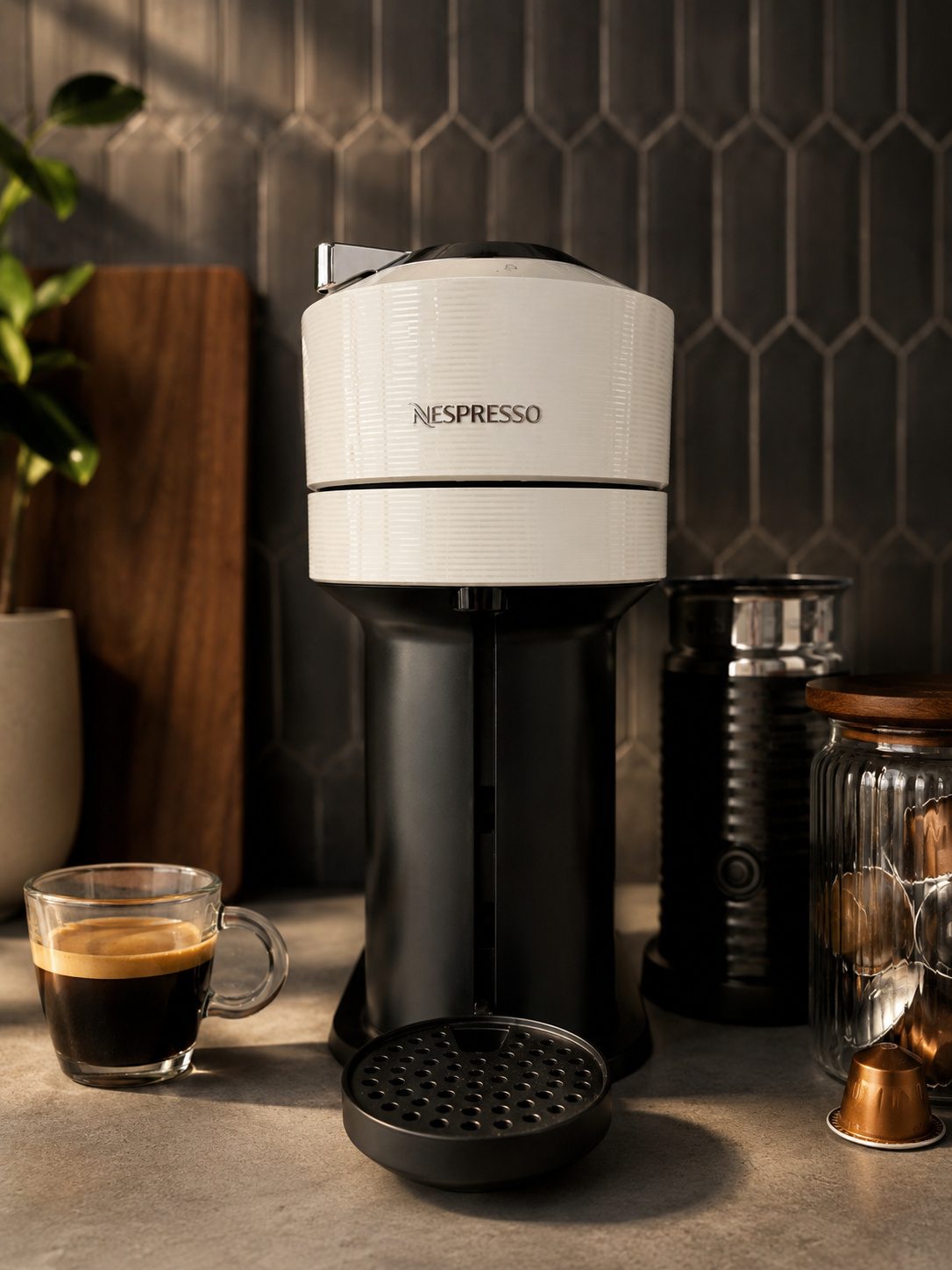
The best pod espresso machine is the one you buy for convenience — not because it makes the same espresso as a fresh-ground machine. If you want fast, clean lattes with zero learning curve, a Nespresso or L'OR setup makes real sense. If you are already spending $500–$700, a real espresso machine plus a grinder is almost always the better Coffee Stack. That is the honest verdict, and this guide builds out exactly why.
Quick Verdict: Pod Espresso Is Convenience, Real Espresso Is Control
Before diving into specific machines, here is the decision in plain language:
- Buy a pod machine if speed, minimal mess, and push-button repeatability matter more than peak espresso flavor.
- Buy real espresso (machine + grinder) if you care about fresh-ground flavor, dialing in shots, using local roasters, and building a setup with a genuine upgrade path.
- Do not buy a $600 pod machine because you think it replaces a real espresso setup. At that price, compare it directly against a Breville Bambino Plus plus a grinder.
Not sure which path fits your kitchen? Build your Coffee Stack to get a personalized recommendation.
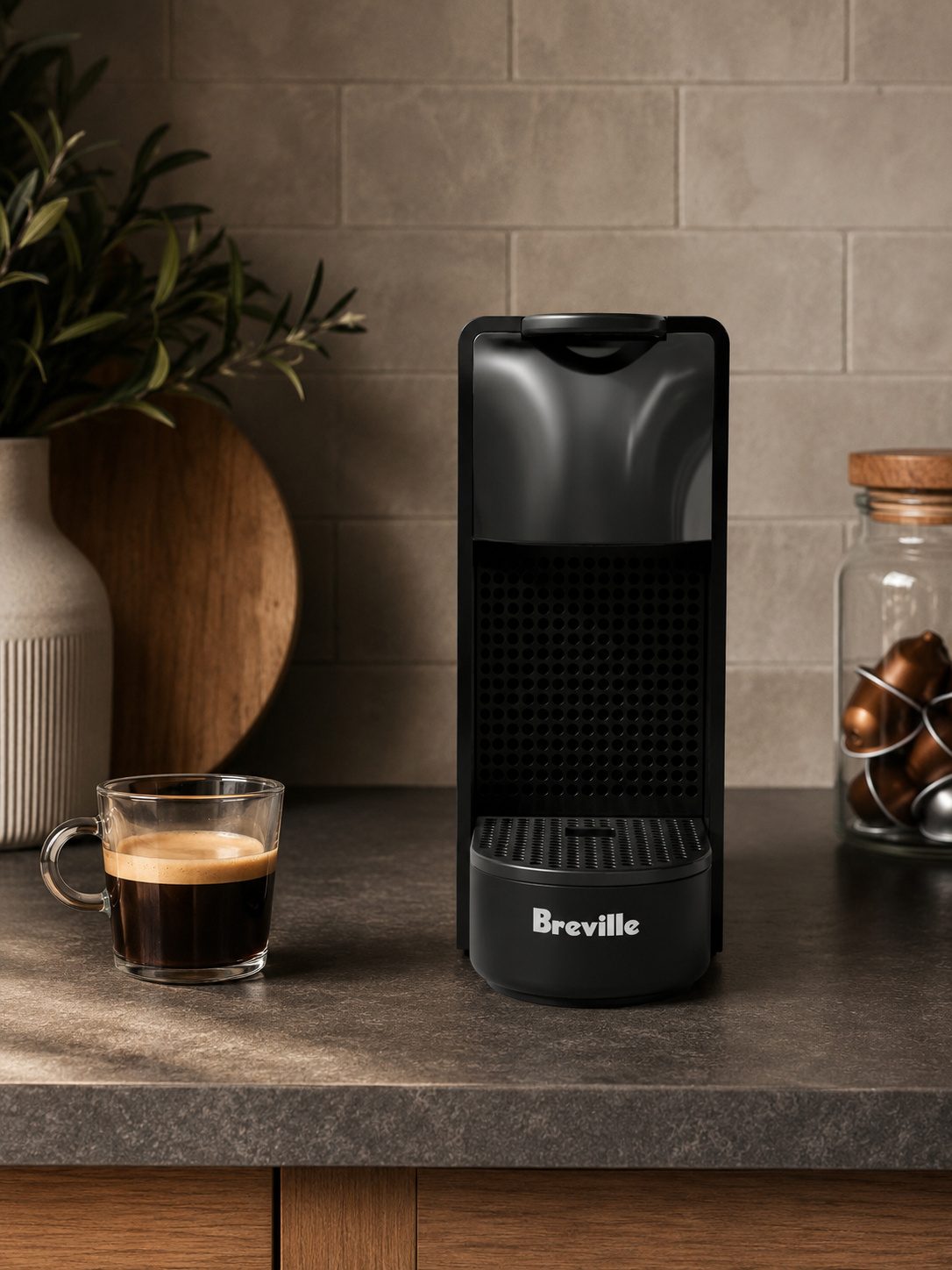
Best Pod Espresso Machine Picks by Situation
Here are the machines worth considering, organized by reader situation rather than price alone.
| Reader situation | Best choice | Why | Approx. machine cost | Required add-ons | Skip it if |
|---|---|---|---|---|---|
| Want one-button drinks + iced coffee | Nespresso Vertuo Up | Six cup sizes, 3-second heat-up, smart app, compact | ~$229.99* | Milk frother, capsule storage | You mostly want short espresso shots |
| Want espresso-style shots on a budget | Nespresso Original-line (Essenza Mini / Pixie) | More espresso-like extraction, third-party capsule flexibility | ~$189–$229* | Aeroccino for milk drinks | Stock is unstable — verify before buying |
| Want pod convenience + premium milk | Nespresso Creatista Plus | Automatic steam wand, Original capsules, premium build | ~$599.99* | Good fresh milk, capsule storage | You care about true espresso quality |
| Want capsule flexibility + double shots | L'OR Barista System | Compatible with L'OR double-shot and Nespresso capsules | ~$189.99* | Milk frother bundle available | You need the deepest capsule ecosystem |
| Want real espresso, willing to learn | Breville Bambino + Baratza Encore ESP | Real portafilter espresso, genuine upgrade path | ~$299–$500* + ~$200* grinder | Scale, fresh beans, knock box | You will not use or clean a grinder |
*All prices as of June 14, 2026 — verify current prices before purchasing as coffee gear pricing changes frequently.
Nespresso Vertuo Up
The Vertuo Up is Nespresso's current compact Vertuo flagship. It heats up in about 3 seconds, holds a 47 oz water tank, brews six cup sizes (including espresso, double espresso, and larger coffees), and has an over-ice button for cold drinks. A smart app lets you customize brew parameters. It is genuinely well-designed for busy households that want variety without complexity. The significant caveat: Vertuo uses proprietary barcode-reading capsules, so you are locked into Nespresso's Vertuo ecosystem. There is no third-party capsule flexibility, and the "espresso" it brews is not the same as a dialed-in shot from a portafilter machine. Approximate price: ~$229.99 (verify current price and color availability, as some colors show stock variability).
Nespresso VertuoPlus
The VertuoPlus uses the same Centrifusion technology — spinning capsules up to 7,000 rpm while hot water is forced through — and a rotating water tank that makes it easier to place in tight spots. It is a reliable, widely available Vertuo option. If you find the Vertuo Up and VertuoPlus at similar prices, the Vertuo Up is the newer machine; if the VertuoPlus is meaningfully cheaper, it still does the core job well. Approximate price: ~$219 for the Deluxe Black (verify).
Nespresso Original-Line: Essenza Mini and Pixie
If your main goal is espresso-style shots rather than larger coffees, the Original line is the better fit. Original machines use a more traditional pressure-based extraction (up to 19 bars) with capsules designed for ristretto, espresso, and lungo volumes. They also support a broader range of third-party compatible capsules from brands like Peet's, Starbucks, and specialty roasters, giving you more variety without Nespresso's pricing. The Essenza Mini (~$189, verify) is the most compact option; the Pixie (~$229, verify) is slightly more robust. Important availability note: both machines showed stock instability in current research — the Essenza Mini appeared sold out on Best Buy and the Pixie showed out of stock on Nespresso USA as of June 14, 2026. Check multiple retailers and verify availability before committing.
Nespresso Creatista Plus
The Creatista Plus (~$599.99, verify) is a premium pod machine with a built-in automatic steam wand, 3-second heat-up, and a beautiful stainless steel design. It delivers the most cafe-like milk workflow of any Nespresso machine. But here is the hard truth: at this price, you are paying for pod convenience plus milk automation in a single unit. You are not getting better espresso than a lower-cost Original-line machine — the capsule is still the capsule. Before spending $600 on a pod machine, read the section below on the $600 question.
L'OR Barista System
The L'OR Barista System (~$189.99 at Target, verify) has one meaningful edge over Nespresso: it accepts L'OR double-shot capsules, L'OR single-shot espresso capsules, and Nespresso Original-compatible capsules. That gives you more capsule options and the ability to brew a stronger double-shot dose. Drawbacks include a narrower overall ecosystem versus Nespresso, controls positioned at the back of the machine (noted in third-party reviews), and the need to verify that L'OR capsules and the machine itself remain well-supported in the U.S. market. If you want Nespresso-compatible capsule flexibility plus double-shot capability, it is worth considering — just confirm current U.S. retailer support before buying.
Pod Espresso vs Real Espresso: The Coffee Stack Difference
The HomeCoffeeStack model frames your coffee setup as a deliberate system, not a single gadget. Pod espresso and real espresso represent two very different stack configurations:
| Stack layer | Pod setup | Real espresso setup | What changes in the cup | Cost implication |
|---|---|---|---|---|
| Machine / brewer | Nespresso or L'OR pod machine | Breville Bambino / Bambino Plus | Pod: consistent, no variation. Real: fully adjustable. | Pod: ~$190–$600. Real: ~$300–$500. |
| Grinder | Not needed — capsule replaces it | Required — Baratza Encore ESP or better | Pod: no grind control. Real: grind size drives extraction. | Pod: $0. Real: ~$200. |
| Beans / capsules | Proprietary capsules only | Any fresh beans from any roaster | Pod: fixed roast profile. Real: infinite variety. | Pod: ~$0.90–$1.35+ per shot. Real: ~$0.30–$0.60 per shot. |
| Accessories | Frother, storage, descaler, recycling | Scale, tamper/distributor, knock box, cleaning tablets | Milk workflow varies by machine choice | Pod: ~$30–$80. Real: ~$60–$120. |
| Workflow | Insert capsule, press button, done | Grind, dose, tamp, pull shot, clean group head | Pod: 60 seconds. Real: 5–10 minutes including cleanup. | Pod: near-zero time cost. Real: daily time investment. |
The grinder is the dividing line. Pod machines remove the grinder decision entirely — and that is the convenience. But removing the grinder also removes the single biggest variable you can control in espresso flavor. Learn why the grinder matters more than the machine.
What “Real Espresso” Means — and Why Pods Taste Different
Certified Italian espresso is roughly 25 ml of concentrated coffee extracted under around 9 bars of pressure, using a precisely dosed and tamped puck of freshly ground coffee. The quality of that shot depends on four things working together: grind size, dose weight, puck resistance (how tightly the coffee is tamped and distributed), and extraction time. Get any one of those wrong and the shot tastes sour, bitter, or thin — which is why “dialing in” is a real skill.
A pod machine removes all of that variability by pre-packaging a fixed dose of pre-ground coffee in a hermetically sealed capsule. The result is repeatable and convenient. But you cannot adjust the grind, you cannot change the dose, you cannot experiment with different roasters at their optimal grind setting, and you cannot taste the difference between a coffee ground three minutes ago versus three weeks ago. That ceiling is what pod espresso cannot cross.
None of this means pod espresso tastes bad. Nespresso invests heavily in capsule blending, nitrogen flushing, and quality control. The shots are genuinely enjoyable for most people. The honest framing is: pod espresso is consistently good; fresh-ground espresso has the potential to be significantly better — and also worse if you do not dial it in properly.
Nespresso Original vs Vertuo: Which Is Better for Espresso?
This is one of the most common questions, and the answer depends on what you actually drink:
- Choose Original if you mostly want short espresso-style drinks (ristretto, espresso, lungo), value third-party capsule compatibility, and want the most espresso-like extraction from a pod machine. Original uses a traditional pump system at up to 19 bars and brews volumes that match traditional espresso sizes.
- Choose Vertuo if you want espresso-style drinks plus larger American-style coffees, iced drinks, and double espressos from the same machine. Vertuo's Centrifusion technology (spinning capsules while hot water is injected) produces a thick foam layer that reads as crema but is not the same as genuine espresso crema. The system is more flexible for mixed households.
The key drawback of Vertuo is strict capsule lock-in — only Nespresso-branded Vertuo capsules work, because the machine reads barcodes on each capsule. Original capsules have a wider third-party market. If espresso-style drinking is your primary use case, Original is the better fit when you can find a machine in stock.
L'OR Barista vs Nespresso
The L'OR Barista System sits in an interesting middle ground. It uses up to 19 bars of pressure, holds a 1 L water tank, and brews 25–220 ml volumes. Its standout feature is compatibility: it works with L'OR Barista double-shot capsules (a genuine two-shot dose in one capsule), L'OR Espresso single-shot capsules, and Nespresso Original-line compatible capsules. That means you can use the wide range of Nespresso-compatible third-party capsules already on the market — a real advantage over the Vertuo ecosystem.
Practical caveats: the controls are positioned at the back of the machine, which some users find awkward. Larger coffee sizes depend on L'OR XXL capsules specifically. And while the machine works with Nespresso Original-compatible capsules, the L'OR capsule ecosystem itself is narrower. Verify current U.S. availability of both the machine and capsules before committing — the L'OR Barista has shown up at Target (~$189.99, verify) but distribution should be confirmed.
The $600 Question: Premium Pod Machine or Real Espresso Setup?
At a $500–$700 budget, convenience must be your explicit reason for choosing a pod machine. If you are spending this much because you think a premium pod machine makes better espresso than a mid-range machine, that assumption is wrong. The capsule is the ceiling — a $600 pod machine and a $190 pod machine produce shots from the same capsule.
Here is what the same budget buys in a real espresso stack:
| Setup | Machine cost | Grinder cost | Accessories | Est. first-year total (drinks + gear) | Who it makes sense for |
|---|---|---|---|---|---|
| Nespresso Creatista Plus (pod) | ~$599.99* | $0 | ~$30–$50 | ~$1,100–$1,300 (2 drinks/day at ~$1.20/capsule) | Committed Nespresso user who wants premium milk workflow, hates grinding |
| Breville Bambino Plus + Baratza Encore ESP (real espresso) | ~$499.95* | ~$199.95* | ~$80–$120 | ~$1,000–$1,200 (2 drinks/day at ~$0.45/shot in beans) | Anyone willing to learn; delivers far higher flavor ceiling |
| Breville Bambino + Baratza Encore ESP (real espresso, tighter budget) | ~$299.95* | ~$199.95* | ~$80–$120 | ~$800–$1,000 | Best value real-espresso entry point |
*All prices as of June 14, 2026 — verify current prices. Bean cost estimate assumes ~18g dose at ~$18/250g bag. Capsule cost estimate uses ~$1.20/capsule average for Creatista Plus Original capsules.
The Bambino Plus (~$499.95, verify) uses a 54 mm portafilter, 18 g dose, 3-second ThermoJet heat-up, automatic milk texturing, and 9-bar extraction with low-pressure pre-infusion. The Bambino (~$299.95, verify) is the same extraction platform with a manual steam wand. Pair either with a Baratza Encore ESP (~$199.95, verify) — an espresso-focused grinder with precise grind resolution — and you have a real espresso stack that outperforms any capsule machine in the cup.
Pod vs Real Espresso Cost Estimator
Use this calculator to see your personal first-year cost and break-even point for each path.
What to Pair With Each Setup
Pod stack essentials:
- Milk frother — if your machine lacks a steam wand, add a Nespresso Aeroccino or similar electric frother. It makes lattes and cappuccinos practical without any technique.
- Capsule storage — a drawer or carousel keeps your counter tidy and gives you a visual inventory of your capsule supply.
- Descaling solution — pod machines scale up quickly because you use them daily. Descale every 2–3 months or when the machine signals it.
- Nespresso recycling bag — Nespresso's aluminum capsules can be recycled through their program; participation requires setting up a recycling routine. Note that actual local access and consumer participation varies, so research the program before relying on it.
Real espresso stack essentials:
- Espresso-capable grinder — this is non-optional. The Baratza Encore ESP (~$199.95, verify) is the standard beginner recommendation: espresso-focused burrs, precise grind adjustment, and a dosing cup included. See the full grinder guide.
- Scale — dose and yield consistency requires a scale. A 0.1g espresso scale costs $20–$40 and immediately improves shot consistency.
- Fresh beans — buy from a local roaster or a quality subscription (Trade Coffee, Atlas Coffee Club) and use beans within 2–4 weeks of roast. See the beans hub.
- Knock box — a place to knock your used puck speeds up cleanup and keeps your counter cleaner.
- Cleaning tablets and backflush discs — run a cleaning cycle weekly to prevent buildup in the group head.
Skip-It-If Guide
Skip pod espresso if:
- You care most about espresso flavor, texture, and the satisfaction of a well-pulled shot.
- You want to explore different roasters and origins at their optimal grind setting.
- You drink 2–4 espresso drinks daily and are calculating long-term per-drink cost carefully.
- You dislike single-use packaging and recycling chores.
- You enjoy learning technique and want a skill that scales with better equipment.
- Your budget is $500+ and convenience is not your explicit priority.
Skip real espresso if:
- You genuinely will not buy, use, or clean a grinder. The grinder is not optional for real espresso, and a good one adds $150–$250 to your budget.
- You need coffee in under 60 seconds before work with zero thought.
- You share the machine with people who will not learn the workflow.
- Troubleshooting a sour shot at 7 a.m. sounds like a dealbreaker.
- Mess, grind residue, and portafilter cleaning will genuinely frustrate you.
Common Mistakes to Avoid
- Buying Vertuo primarily for espresso shots — Vertuo is optimized for variety across cup sizes. If espresso-style shots are your main use, an Original-line machine is a better match.
- Spending $600 on a pod machine thinking it makes better espresso — premium pod machines upgrade the milk workflow and build quality, not the espresso itself. The capsule is still the capsule.
- Comparing machine price only, not capsule cost — at 2 drinks a day, the difference between $0.90/capsule and $0.45/shot in beans adds up to $330 per year.
- Assuming “19 bars” means better espresso — real espresso extraction runs at about 9 bars. High pump pressure in marketing specs does not translate directly to better shots; grind, dose, and puck preparation matter far more.
- Skipping the grinder for real espresso — pre-ground espresso from a bag degrades fast and cannot be adjusted for your machine. Always budget for an espresso grinder in a real espresso stack.
- Buying Original-line machines without checking stock — the Essenza Mini and Pixie have shown availability issues. Confirm current stock at multiple retailers before purchasing.
Final Recommendation by Budget and Skill
Under $200: If you want pod convenience and a compact footprint, look for the Nespresso Essenza Mini or a comparable Original-line machine if in stock (check Amazon and Nespresso directly). Add a milk frother for lattes. Avoid real espresso at this budget unless buying used equipment — the grinder alone costs $150+.
$200–$350: The Nespresso Vertuo Up (~$229.99) is the best all-around pod pick for mixed households. The L'OR Barista (~$189.99) is worth considering if you want double-shot capsule options. For real espresso, the Breville Bambino (~$299.95) is in range, but budget another $200 for a grinder — total stack cost lands at $500+ even at this tier.
$350–$600: This is where the decision really matters. If convenience is your priority, a premium pod machine with milk like the Creatista Plus makes sense — but only if you are committed to the pod workflow long-term. If you are open to learning, the Breville Bambino Plus (~$499.95) plus a Baratza Encore ESP (~$199.95) is a better Coffee Stack: more flavor, more control, lower long-term cost per drink, and a real upgrade path.
$600–$800+: Unless convenience is the explicit reason, skip premium pods entirely. Build the real espresso stack: Breville Bambino Plus + Baratza Encore ESP + scale + fresh beans. You will have a better setup that improves with your skill.
If you are still deciding, use the Coffee Stack Builder to get a matched recommendation for your budget, skill level, and kitchen setup. For a deeper look at beginner espresso machines, see the espresso hub. For grinder guidance, the grinder hub has detailed picks at every budget.
FAQ
Are pod espresso machines real espresso?
They produce espresso-style concentrated coffee using pressure and pre-ground capsules, but they do not give you the control of a portafilter setup with a dialed-in grinder. The result is convenient and consistent — Nespresso in particular invests heavily in capsule quality — but the taste ceiling is lower than well-pulled fresh-ground espresso. Think of it as “espresso-like” rather than espresso in the traditional sense.
What is the best pod espresso machine for most people?
For all-around convenience, the Nespresso Vertuo Up is a strong current pick with its 3-second heat-up, six cup sizes, and smart app (approximately $229.99 — verify current price and availability before buying). For short espresso-style shots specifically, an Original-line machine like the Essenza Mini or Pixie is a better fit, but check stock at multiple retailers as availability has been inconsistent.
Is Nespresso Original or Vertuo better for espresso?
Original-line machines are better for short espresso-style drinks. They use a traditional pump system at up to 19 bars and brew ristretto, espresso, and lungo volumes. They also support a wider range of third-party compatible capsules. Choose Vertuo if you want those same espresso-style drinks plus larger coffees, iced drinks, and different brew sizes from one machine.
Is the Nespresso Creatista Plus worth it?
The Creatista Plus (~$599.99, verify) is worth considering only if you specifically want Nespresso Original capsule convenience combined with a premium automatic steam wand. The espresso quality is not higher than a basic Original machine — the capsule content is the same. At this budget, compare it directly against a Breville Bambino Plus plus a Baratza Encore ESP before deciding. That real espresso stack gives you significantly more flavor control and a genuine upgrade path.
Should I buy a pod machine or a Breville Bambino?
Buy the pod machine if you want speed, minimal mess, and push-button repeatability with no learning curve. Buy the Bambino (~$299.95, verify) if you are willing to add a grinder (~$200), learn basic technique, and want real espresso quality. The Bambino path requires a higher upfront investment and daily workflow engagement, but the flavor ceiling and long-term cost per drink are both better.
Do pod espresso machines need a grinder?
No — the capsule replaces the grinder entirely, which is the core convenience of pod machines. You insert, press, and drink. The trade-off is that you cannot adjust grind size, change the dose, or experience the difference that fresh grinding makes. Real espresso setups require an espresso-capable grinder; it is the most important piece of the stack after the machine.
How much do Nespresso pods cost?
Current Nespresso USA examples show many Original-line capsules around $0.90–$1.00 each, and Vertuo espresso capsules commonly around $1.08–$1.35+ each for single and double espressos. Prices change frequently — verify at nespresso.com before calculating your ongoing costs. At 2 drinks a day, capsule costs add up to roughly $650–$1,000 per year depending on which capsules you use.
Is L'OR Barista better than Nespresso?
Neither is strictly better — they serve different priorities. L'OR Barista is worth considering if you want compatibility with both L'OR double-shot capsules and Nespresso Original-compatible capsules, giving you more variety and stronger dose options. Nespresso has a much larger capsule ecosystem and broader retail availability. Confirm L'OR's U.S. retail support and capsule availability before committing.
Are pod machines cheaper than real espresso long term?
Upfront, often yes. Long term, it depends on how many drinks you make. The cost estimator above can show your personal break-even. As a rough guide: at 2 drinks per day, capsules at $1.20 each cost about $875 per year; beans at $0.45 per shot cost about $330 per year. The real espresso setup costs more in gear upfront, but a lower ongoing cost per drink typically makes it cheaper after 12–24 months of regular use.
What should I pair with a pod espresso machine?
Add a milk frother (an Aeroccino or similar electric frother) if your machine lacks a steam wand, a capsule storage drawer, descaling solution, and a Nespresso recycling bag if you plan to use their aluminum capsule recycling program. For a real espresso setup, your first and most important add-on is always an espresso-capable grinder — the Baratza Encore ESP is the standard beginner recommendation.