 By Jared White
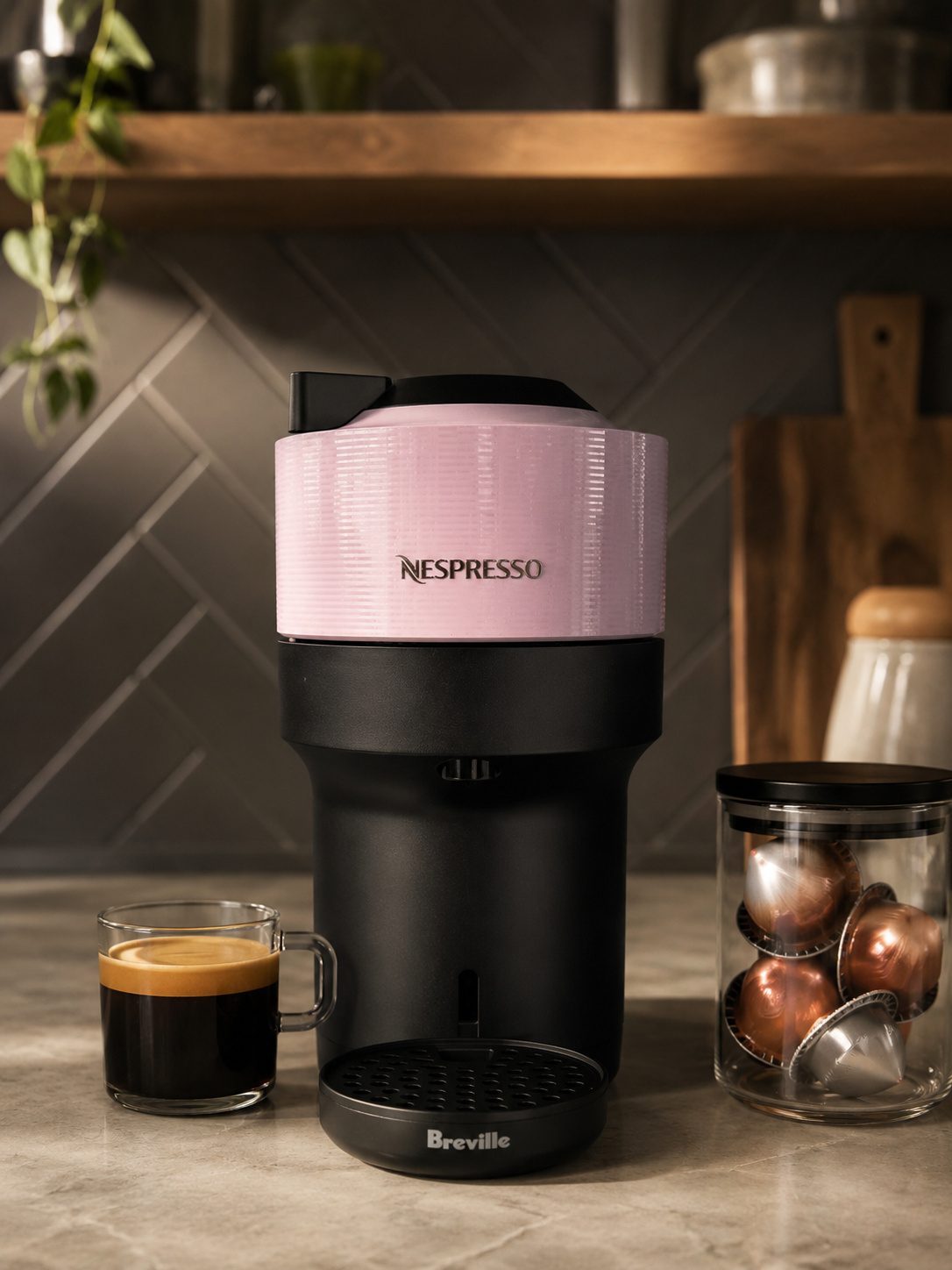
A real espresso machine is worth upgrading to only if you are also willing to buy an espresso-capable grinder and learn a simple shot workflow. If you want fast, consistent, low-mess coffee before work, Nespresso is the better system — not the better espresso. The real decision is not pod vs portafilter; it is convenience stack vs espresso stack.
Most comparisons get this wrong by looking at machine prices alone. A $299 espresso machine is not a $299 espresso setup. Add a grinder, a scale, fresh beans, and cleaning supplies and the real entry point is closer to $500–$600. That context changes whether the upgrade makes sense for you — and that is what this article is actually about.
Quick Verdict: Who Should Choose What
| Reader type | Best pick | Why | Skip if |
|---|---|---|---|
| Busy mornings, no fuss | Nespresso Original or Vertuo | One-button, consistent, no grinder | Pod lock-in or cost per drink bothers you |
| Want better lattes, will learn | Breville Bambino + Baratza Encore ESP | Real espresso + milk texture ceiling | You will not grind fresh or clean daily |
| Milk drink household, multiple daily | Bambino Plus + Encore ESP | Auto steam wand + real espresso | Budget is under $600 total |
| Under $200 budget | Nespresso Essenza Mini | Small footprint, lower pod cost, no grinder needed | You want large mugs or built-in milk |
| Hate measuring and cleaning | Nespresso, full stop | Convenience stack removes all friction | Flavor ceiling matters to you |
| Black coffee by the mug | Neither — consider drip or pour-over | Espresso is concentrated, not large-batch | You actually want espresso-style drinks |
Not sure which box you are in? The Coffee Stack Builder can map your drinks, budget, and workflow to a specific setup.
The Real Difference: Convenience Stack vs Espresso Stack
Nespresso removes the grinder from your stack entirely. You insert a capsule, press a button, and the machine handles pressure, temperature, and extraction. There is nothing to dial in, nothing to weigh, and no messy portafilter to knock and rinse. That is a genuine feature, not a compromise — for a lot of households, it is the correct choice.
A real espresso machine puts the grinder back in the stack, and with it comes a chain of decisions: grind size, dose weight, distribution, tamp pressure, shot time, and yield. On a good morning this takes three to four minutes. On a bad morning, when beans are running low or the grind needs adjustment, it takes longer. The reward is a shot ceiling that a pod machine cannot reach. The cost is that the ceiling only appears when the whole stack is working.
Here is how the two stacks actually look:
- Nespresso Stack: machine + proprietary capsules + optional frother + recycling plan. Grinder removed. Total friction: low.
- Espresso Stack: machine + espresso-capable grinder + fresh beans + 0.1 g scale + tamping workflow + milk pitcher + cleaning supplies. Total friction: medium to high at first, lower once the workflow is habitual.
The grinder is the deciding variable. A real espresso machine without a capable grinder often disappoints more than Nespresso does.
Is Nespresso Real Espresso?
Not quite, but the distinction is worth stating without snobbery. The Specialty Coffee Association defines traditional espresso as roughly 25–35 ml of beverage brewed from freshly ground coffee under about 9 bar of pressure at 195–205°F, with full control over dose, grind, and extraction time. Modern specialty practice often uses an 18–20 g dose and a roughly 1:2 brew ratio.
Nespresso Original machines do operate at espresso-range pressures and produce a small, concentrated shot. The difference is that you have zero control over grind (it is pre-ground inside the capsule), dose (fixed by the capsule), and freshness (ground at manufacture, not at brew time). The result is consistent and often pleasant, but it has a hard ceiling set by the capsule contents.
Nespresso Vertuo uses centrifusion — a barcode-read spinning capsule — which is a different brewing method entirely. The foam it produces is lighter and more aerated than traditional espresso crema. It is not the same thing, even if it looks similar in a small cup.
None of this makes Nespresso bad. It makes it a different product category: a consistent, convenient, espresso-adjacent drink system.
Taste: How Much Better Is a Real Espresso Machine?
The honest answer: higher ceiling, lower floor. A dialed-in shot from a Breville Bambino with fresh beans and an Encore ESP grinder will outperform any Nespresso capsule on body, aroma, crema quality, and complexity. The espresso stack gives you access to the full range of single-origin and specialty-roast flavors that capsule formats cannot preserve.
But a poorly dialed-in shot from the same Bambino — stale beans, wrong grind, under-dosed — will taste worse than a Nespresso capsule. That is the "lower floor" reality. Nespresso is engineered for consistency. Real espresso is not engineered; it is practiced.
For milk drinks, the gap widens in favor of real espresso. A steam wand produces microfoam with a texture Nespresso frothers cannot replicate. If flat whites, lattes, or cappuccinos are your primary drink, a real espresso machine with a steam wand is the more compelling upgrade — especially the Bambino Plus with its automatic steam wand (~$499.95; verify current price).
Cost: Machine Price vs Total Setup Price
This is where most comparisons mislead readers. Here is the actual first-year math:
| Setup | Upfront gear | Estimated 12-month consumables | Estimated first-year total | Notes |
|---|---|---|---|---|
| Nespresso Vertuo Pop+ (convenience stack) | ~$99.99 machine + ~$30 frother | 2 drinks/day × $1.35/capsule × 365 = ~$986 | ~$1,116 | Prices as of June 16, 2026; verify current capsule pricing |
| Nespresso Original Essenza Mini | ~$179.95 machine + ~$30 frother | 2 drinks/day × $0.90/capsule × 365 = ~$657 | ~$867 | Original pods average lower; verify current pricing |
| Breville Bambino + Baratza Encore ESP (beginner real espresso) | ~$299.95 machine + ~$199.95 grinder + ~$50 accessories | 2 double shots/day × ~$0.45/shot × 365 = ~$329 (beans at ~$18/250 g bag, ~20 g/shot) | ~$879 | Bean cost estimate only; verify grinder and machine prices |
| Bambino Plus + Encore ESP (latte household) | ~$499.95 machine + ~$199.95 grinder + ~$50 accessories | Same bean estimate ~$329 | ~$1,079 | Higher upfront; milk drink quality gain is significant |
The takeaway: at two drinks per day, the Essenza Mini stack and the Bambino + Encore ESP stack end up at similar first-year totals. Vertuo costs more per drink. The Bambino Plus stack is roughly in line with Vertuo once year two arrives and the upfront gear cost is amortized. These are estimates based on current pricing — your bean cost and capsule selection will shift the math.
Per-Drink Cost: Pods vs Beans
| Drink | System | Consumable cost | Per-drink cost | What you give up |
|---|---|---|---|---|
| Espresso / short shot | Nespresso Original | ~$0.90/capsule (Arpeggio, June 2026) | ~$0.90 | Grind freshness, dial-in control |
| Double espresso | Nespresso Vertuo | ~$1.35/capsule (Double Espresso Scuro, June 2026) | ~$1.35 | Same as above; centrifusion process |
| Double shot (18 g dose) | Breville Bambino + fresh beans | ~$18/250 g specialty bag ÷ ~13 doses | ~$0.40–$0.55 | Speed, simplicity; grinder required |
| Latte (double shot + milk) | Nespresso + Aeroccino | ~$0.90–$1.35 capsule + milk | ~$1.20–$1.70 | Milk texture, shot depth |
| Latte (double shot + steam) | Bambino Plus + fresh beans | ~$0.40–$0.55 beans + milk | ~$0.70–$1.00 | Setup time, learning curve |
All capsule prices from Nespresso USA as of June 16, 2026; bean cost is an estimate based on a mid-range specialty bag. Verify all before publishing.
Try the Cost Calculator
Workflow: What Your Morning Actually Looks Like
Nespresso morning: fill tank if needed, insert capsule, press button, drink. Eject used capsule into the drip tray collector when full. Total active time: under two minutes. The machine handles everything else.
Real espresso morning: machine warms up (the Bambino heats in about 3 seconds via ThermoJet), grind dose into portafilter, distribute, tamp, lock in, pull shot (~25–30 seconds), check yield if you are using a scale, steam milk, drink. Wipe steam wand, purge briefly, rinse portafilter. Total active time: 4–7 minutes once you have a routine. Add 5–10 minutes of occasional deep cleaning and descaling per week.
Neither workflow is inherently better. The Nespresso one is objectively faster and lower-mess. The espresso one is more engaging if you enjoy the craft, and that engagement either feels satisfying or annoying depending on who you are.
Milk Drinks: Lattes, Cappuccinos, and Flat Whites
This is where real espresso pulls ahead most decisively. A steam wand — even the manual one on the Bambino — can produce microfoam with genuine latte-art potential. The texture is silky and integrates with espresso in a way that frothed milk does not. If you are making flat whites or wet cappuccinos at home, a steam wand is the difference between a drink that tastes like a café and one that tastes like a good frothy coffee.
The Bambino Plus (~$499.95; verify current price) adds an automatic steam wand with three temperature settings and three texture settings, which removes much of the milk-steaming learning curve. Breville also lists a Bambino Plus + Baratza Encore ESP bundle at around $649.95 (verify current price) — a reasonable starting point for latte households who want both decisions made at once.
Nespresso with an Aeroccino produces foam that is more aerated and less integrated. It works well and is far simpler. But if milk texture is the main reason you are considering the upgrade, the espresso stack is the right answer — and the Bambino Plus reduces the difficulty gap significantly.
Grinder Reality: Why the Grinder Matters More Than the Machine
This is the most important section in this article, and the one most comparisons skip. The espresso machine extracts flavor from ground coffee. The grinder determines the consistency, particle size, and freshness of that ground coffee. A mediocre grinder paired with a good machine produces mediocre espresso. A capable grinder paired with even a modest machine produces shots that dramatically outperform Nespresso.
The Baratza Encore ESP (~$199.95; verify current price) is the entry-level recommendation for espresso grinders at HomeCoffeeStack. Baratza describes it as optimized for espresso precision. It is a stepped-adjustment burr grinder that pairs naturally with the Bambino or Bambino Plus and covers the espresso range well for beginners.
The single most important upgrade advice in this article: if you are planning to buy a real espresso machine now and a grinder later, flip the order. Choose the grinder first, then pick a machine in the budget that remains. Or budget for both at the same time. The "machine now, grinder later" path is the most common disappointment we see.
A Bambino without a capable grinder is not the same recommendation as a Bambino with an Encore ESP. They are different products in terms of what they will actually deliver in your cup.
Which Nespresso Line Should You Choose If You Stay With Pods?
Original Line (Essenza Mini, Pixie, CitiZ): better for espresso-style drinks, lower per-capsule cost (~$0.90 vs ~$1.35 for Vertuo; June 2026 pricing), and broader third-party capsule compatibility in many markets. The Essenza Mini is the compact, value-focused Original choice at ~$179.95 (Breville official listing; verify current price).
Vertuo Line (Vertuo Pop+, Vertuo Up): better if you want multiple cup sizes including large coffees from a single machine, and prefer one-button simplicity with Nespresso-managed brewing profiles. The Vertuo Pop+ runs ~$99.99–$129.99 (Nespresso USA, June 2026; verify current price) and covers five sizes from espresso to 12 oz XL. Capsules are more expensive per drink and are Nespresso-proprietary.
If your primary drink is a small espresso or ristretto and cost per capsule matters, Original Line is the stronger choice. If you want the convenience of large coffees alongside espresso-style drinks without a separate machine, Vertuo makes more sense.
One note on pod waste: Nespresso offers mail-back recycling nationwide in the US, plus boutique drop-off and select curbside or home pickup in certain areas. Visit nespresso.com/us/en/recycling to check what is available in your location — do not assume curbside is available everywhere.
Recommended Coffee Stacks by Buyer Type
| Budget | Machine | Grinder | Best for | Avoid if |
|---|---|---|---|---|
| Under $200 | Nespresso Essenza Mini (~$179.95) | None needed | Espresso-style pods, small counter, low friction | Large mugs, built-in milk, grind control |
| $100–$130 | Nespresso Vertuo Pop+ (~$99.99–$129.99) | None needed | One-button variety, multiple sizes | Lowest per-pod cost or open capsule options |
| $500–$600 | Breville Bambino (~$299.95) | Baratza Encore ESP (~$199.95) | First real espresso, manual milk steam | Auto milk or skipping the grinder |
| $650–$800 | Breville Bambino Plus (~$499.95) | Baratza Encore ESP (~$199.95) | Latte/cappuccino households, easier milk | Budget under $650 or no milk drinks |
| $700+ bundle | Bambino Plus + Encore ESP bundle (~$649.95) | Included in bundle | Convenience of one purchase decision, lattes | Preferring a stronger grinder upgrade path |
All prices as of June 16, 2026 from official brand listings; verify before purchasing.
Need help picking your specific stack? Use the Coffee Stack Builder to match your drinks, budget, and workflow to a complete setup recommendation.
Common Mistakes
- Comparing only machine prices. The real comparison is total stack cost. A $299 espresso machine needs a $200 grinder to work properly.
- Buying a machine without a grinder. This is the most common reason people are disappointed after upgrading from Nespresso.
- Expecting real espresso to be as fast as Nespresso. It is faster than many people think, but it is not one-button.
- Expecting Nespresso to taste like café espresso. It will not. It is consistent and convenient, but the ceiling is set by the capsule.
- Buying Vertuo for ‘cheap espresso’ without checking capsule prices. Vertuo capsules run about 50% more per drink than Original Line.
- Buying a Bambino Plus when Bambino + better grinder would taste better. If your budget is fixed, the grinder upgrade often delivers more flavor improvement than the auto steam wand.
Final Verdict: Is the Upgrade Worth It?
Yes — but only if you are buying the espresso stack, not just an espresso machine.
If you want fast, low-friction, consistent coffee before work and are not interested in grinding, measuring, or learning, Nespresso is genuinely the better system for your life. The Original Line Essenza Mini at ~$179.95 is the tightest value, and the Vertuo Pop+ at ~$99.99–$129.99 is the easiest entry point for multiple drink sizes.
If you care about flavor ceiling, real milk texture, bean choice, and the satisfaction of building a setup that improves with practice, the upgrade is absolutely worth it — as long as you budget for the full stack. The Breville Bambino (~$299.95) paired with the Baratza Encore ESP (~$199.95) is the minimum serious real espresso stack for beginners. Budget around $550–$600 including a scale and basic accessories, and plan to spend a week dialing in your first beans.
If you are unsure which path fits your life, choose your grinder before you choose your machine — the grinder is what makes the upgrade real.
Ready to map out the full setup? The Coffee Stack Builder will walk you through machine, grinder, beans, and accessories in one place. Or go deeper into the machine decision at the Espresso hub or the Grinders hub.
FAQ
Is Nespresso the same as espresso?
Not exactly. Nespresso Original makes espresso-style concentrated coffee at espresso-range pressures, but uses a pre-portioned sealed capsule with no grind, dose, or time control. The Specialty Coffee Association defines traditional espresso as roughly 25–35 ml brewed from freshly ground coffee under about 9 bar of pressure, with full barista control over dose and extraction. Nespresso Vertuo uses centrifusion — a spinning capsule read by barcode — which is a different process entirely. Both produce a small concentrated drink, but they are not the same thing.
Is an espresso machine worth upgrading from Nespresso?
Yes, if you want a higher flavor ceiling, real milk texture, and bean choice — and are willing to buy an espresso-capable grinder alongside the machine. No, if convenience is your first priority or you are not ready to grind fresh and dial in shots. The upgrade is only satisfying when you build the full stack.
Do I need a grinder for a real espresso machine?
Yes. Pre-ground coffee cannot be dialed in for espresso and often produces flat, under-extracted shots. An espresso-capable grinder such as the Baratza Encore ESP (~$199.95; verify current price) is not optional if you want the upgrade to outperform Nespresso. Buying a machine without a grinder is the most common disappointment path.
Is Nespresso cheaper than a real espresso machine?
Up front, usually yes. Long term it depends on drink volume. Vertuo capsules run roughly $1.35–$1.40 each and Original capsules around $0.90 each (Nespresso USA, June 2026; verify current prices). Fresh beans for espresso typically cost $0.35–$0.55 per double shot depending on bag cost and dose. The higher your daily volume, the faster beans win on per-drink cost.
Which is better for lattes — Nespresso or an espresso machine?
A real espresso machine with a steam wand produces textured microfoam you can pour into a proper latte. Nespresso with an Aeroccino frother is easier and cleaner, but the foam is more aerated and less silky. If milk drinks are the main reason to upgrade, the Bambino Plus with its automatic steam wand is the more direct answer.
Should I buy Nespresso Original or Vertuo?
Original is generally better for espresso-style drinks, has lower per-capsule cost, and offers broader third-party capsule compatibility in some markets. Vertuo is better if you want larger one-button coffees in multiple sizes from a single machine. For espresso specifically, Original is the closer analog.
What is the best beginner espresso machine after Nespresso?
The Breville Bambino (~$299.95; verify current price) paired with the Baratza Encore ESP grinder (~$199.95; verify current price) is the standard HomeCoffeeStack beginner recommendation. Breville also offers a Bambino Plus + Encore ESP bundle at around $649.95 (verify current price). Do not buy the machine without the grinder — the grinder is what makes the upgrade meaningful.
How much should I budget for a first real espresso setup?
Around $500 minimum for machine plus grinder — Bambino at ~$299.95 and Encore ESP at ~$199.95 (verify both). Budget closer to $600–$750 once you add a 0.1 g scale, milk pitcher, knock box, cleaning tablets, and a bag of fresh espresso beans. All prices as of June 16, 2026.
Is Breville Bambino better than Nespresso?
It can produce better espresso, but only with fresh beans, a capable grinder, and a dialed-in workflow. Without those, Nespresso is often more satisfying because it is engineered for consistency. The Bambino raises the ceiling; it does not guarantee every shot will beat a pod out of the box.
Are Nespresso pods recyclable?
Nespresso says US customers can recycle used capsules via nationwide mail-back bags, Nespresso boutiques, and select home pickup or curbside programs. Mail-back is the universally available US option. Check nespresso.com/us/en/recycling to see what is available in your specific area — do not assume curbside pickup is available everywhere.