 By Jared White
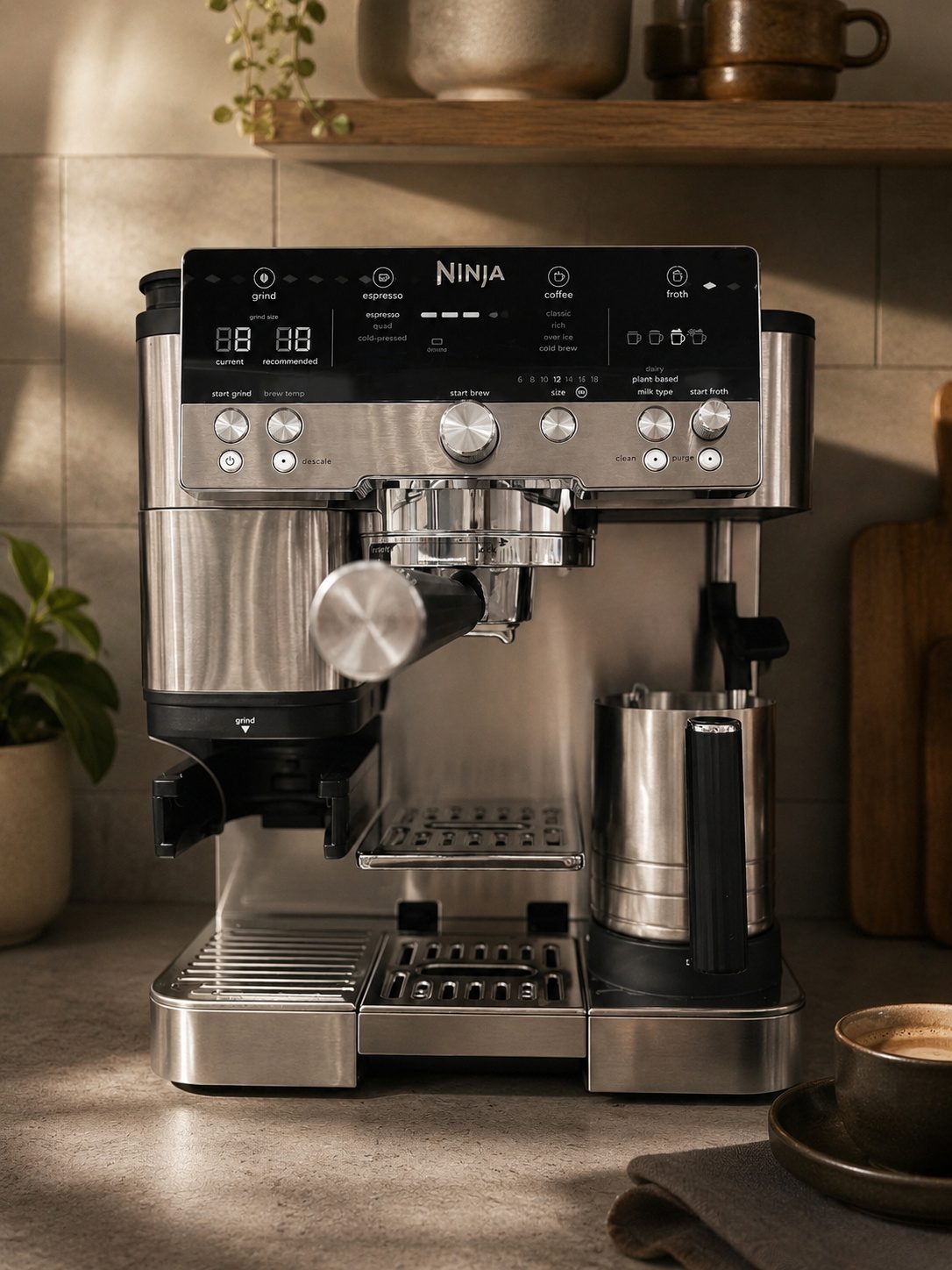
The Ninja Luxe Cafe is a good buy for beginners who want one guided appliance for espresso-style drinks, drip coffee, and cold brew — but it is not the same as building a true upgradeable espresso stack. Its biggest strength is convenience; its biggest limitation is that the built-in grinder sets the ceiling for your espresso.
This review judges the Ninja Luxe Cafe the way HomeCoffeeStack evaluates every piece of gear: as part of a full Coffee Stack — machine, grinder, beans, accessories, workflow, and total realistic cost. That framing matters here more than usual, because the Ninja is selling you on the idea that it consolidates most of that stack into one box. Sometimes that is exactly the right move. Sometimes it is not. Let's find out which one it is for you.
Disclosure: This review is based on researched specifications, verified owner feedback, and Coffee Stack fit analysis. Prices cited throughout are approximate — verify current pricing before purchasing, as coffee gear prices change frequently.
Quick Verdict: Is the Ninja Luxe Cafe Worth It?
For the right buyer, yes. For the wrong buyer, there are better paths. Here is the 30-second version:
| Category | Verdict | Why It Matters |
|---|---|---|
| Best for | Beginners, latte drinkers, one-machine households | Guided workflow removes most early friction |
| Not for | Espresso purists, enthusiasts with grinders, upgrade-path buyers | Built-in grinder limits the ceiling |
| Espresso quality | Good enough for milk drinks; limited for straight espresso | Pressurized portafilter system, not prosumer extraction |
| Grinder | Convenient but not equivalent to a standalone espresso grinder | Cannot be upgraded independently |
| Milk drinks | Strong — this is where the machine shines | Built-in frothing system handles lattes and cappuccinos well |
| Workflow | Guided, appliance-style — faster to learn than a semi-auto | Less manual control, but that is the point |
| Upgrade path | Limited — you replace the whole system | Modular machine + grinder setups age better |
| Total stack cost | ~$550–$725 to start; verify current machine price | Accessories and beans still add up |
Ready to buy? Check the current price on Amazon. Still deciding? Keep reading — the comparison section below will help you choose between the Ninja and a separate machine-plus-grinder stack.
What the Ninja Luxe Cafe Is Actually Trying to Be
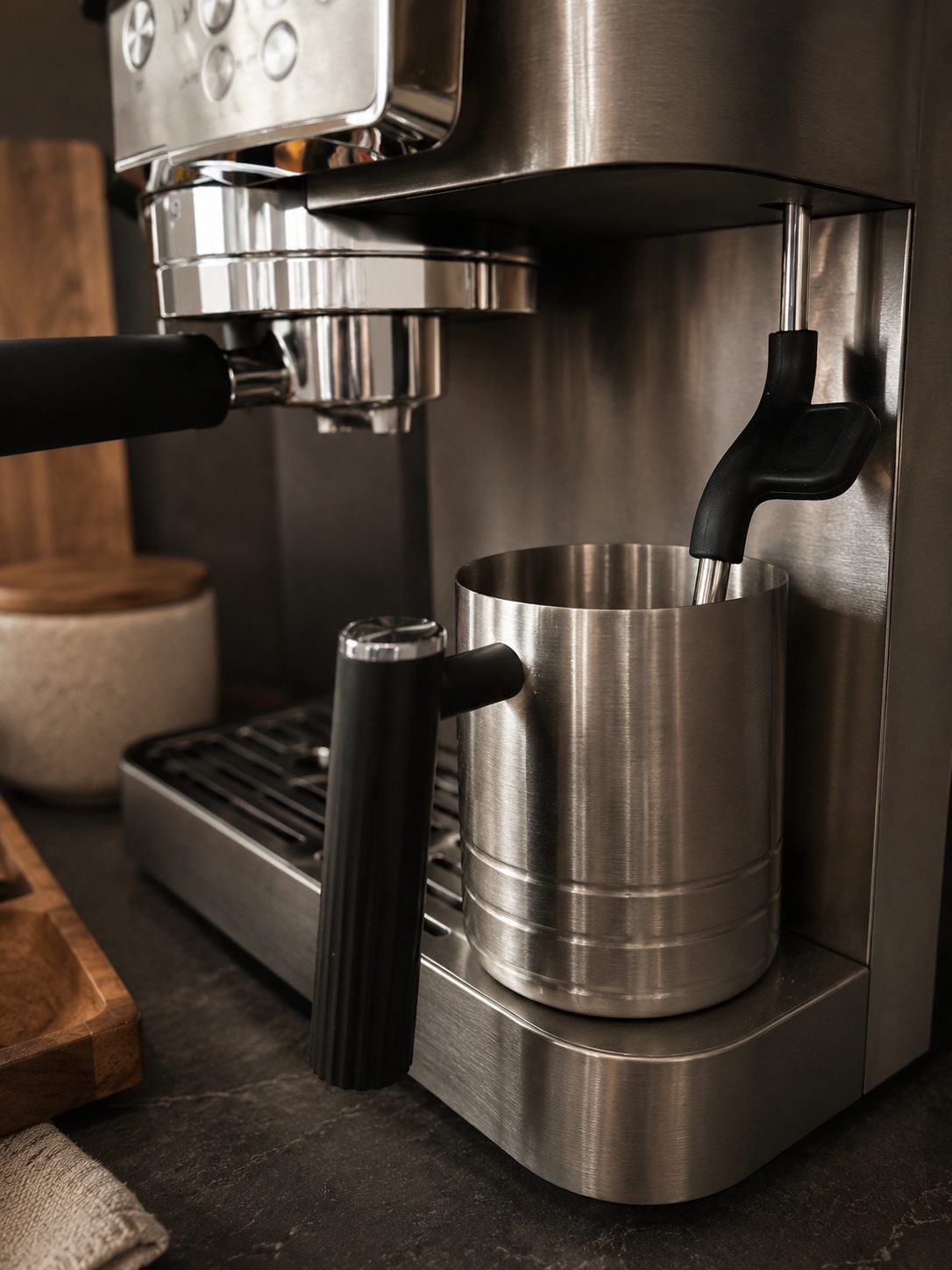
Most espresso machine reviews treat the Ninja Luxe Cafe as though it is competing directly with traditional semi-automatic espresso machines. That is the wrong frame. The Ninja is not an espresso machine that also does drip coffee as an afterthought. It is a home coffee appliance — a single unit designed to consolidate your grinder, your espresso brewer, your drip coffee maker, your cold brew setup, and your milk system into one countertop footprint.
That is genuinely useful for a specific kind of household. If your current setup is a Keurig for weekday mornings, a separate drip maker on weekends, and a wish for proper lattes without buying four different appliances, the Ninja Luxe Cafe solves a real problem.
The Luxe Cafe (sold as part of Ninja's Premier Series, with model numbers varying by retailer and region — verify the current SKU at the time of purchase) includes a built-in burr grinder with assisted dosing, a pressurized portafilter system for espresso-style brewing, multiple drink modes covering espresso, drip-style coffee, cold brew, and specialty drinks, plus a milk frothing system capable of hot and cold foam. The exact modes and included accessories vary by SKU, so confirm the specific model before buying.
Understanding what it is trying to be is the key to evaluating it honestly. Judged as a replacement for a $700 semi-automatic machine and a $300 standalone grinder, it falls short. Judged as a guided all-in-one system for a beginner who wants to skip that learning curve entirely, it holds up much better.
Who Should Buy the Ninja Luxe Cafe
The Ninja Luxe Cafe is a strong option in these specific situations:
- Upgrading from pods or a basic drip maker. If your morning ritual involves a Keurig, a Nespresso, or a supermarket drip machine, the Ninja represents a meaningful quality jump without requiring you to become a home barista overnight.
- You mostly drink milk-based drinks. Lattes, cappuccinos, flat whites, iced lattes — this is where the Ninja performs best. The milk system handles the heavy lifting and the pressurized extraction holds up well when espresso is a base for milk rather than the star of the show.
- One machine for one countertop. Small apartment, shared kitchen, or a partner who does not want a grinder-machine-frother-knock box situation. The Ninja consolidates the stack into one footprint.
- Households with mixed drink preferences. One person wants espresso; another wants regular drip coffee; someone else wants cold brew. The Ninja handles all of it without buying separate appliances.
- Beginners who value guided workflow over manual control. The assisted dosing and drink guidance reduce the number of variables you have to manage as a new espresso maker. That is a real benefit when you are starting out.
Who Should Skip the Ninja Luxe Cafe
The following buyers will likely be better served by a different setup:
- You want the best straight espresso quality per dollar spent.
- You already own a capable espresso grinder — you would be paying for a grinder you do not need.
- You want to upgrade your machine and grinder independently over time.
- You enjoy manual puck prep, dialing in grind settings, and the traditional semi-automatic espresso workflow.
- You mainly drink straight espresso and care about texture, shot clarity, and shot-to-shot consistency.
- Long-term repairability and parts availability matter to you — verify Ninja's support and parts program before committing.
- You want a setup that grows with your skill level. The Ninja's appliance-style design is its appeal and its limitation simultaneously.
The Coffee Stack View: Where the Ninja Fits
HomeCoffeeStack's core idea is that great coffee comes from a deliberately built system — not one appliance. Here is how the Ninja Luxe Cafe maps onto each layer of that stack:
- Machine/brewer layer: Covered. The Ninja handles espresso-style extraction, drip brewing, and cold brew modes in one unit. Verify exact brew modes by SKU.
- Grinder layer: Partially covered — and this is the catch. The built-in grinder handles dosing with guidance, but it cannot be upgraded. The grinder is the performance ceiling of the whole system.
- Brewing method layer: Strong. Multiple formats in one machine is the Ninja's best argument.
- Beans layer: Not covered — you still need to source fresh beans. This is arguably the most important layer, and it is the one most buyers underestimate. See the pairing section below.
- Accessories layer: Partially covered. A scale, cleaning supplies, and possibly a knock box still belong in the stack.
- Counter space and workflow layer: This is where the Ninja wins cleanest. One footprint, one cleaning routine, one learning curve.
Want to map out your full coffee setup? Try the HomeCoffeeStack Stack Builder to see where your system has gaps.
Built-In Grinder: Helpful for Beginners, But the Performance Ceiling
Every HomeCoffeeStack review comes back to the same principle: the grinder matters more than the machine. That is especially relevant here, because the Ninja Luxe Cafe's grinder is both its most convenient feature and its biggest limitation.
The built-in grinder provides assisted dosing — it grinds a measured amount for your selected drink mode and guides you through the process. For a beginner, that removes one of the most confusing variables in home espresso: figuring out how much coffee to grind and how fine to set it. That is genuinely useful.
The limitations emerge when you start comparing it against standalone espresso grinders at similar or lower price points. A dedicated grinder like the Baratza Encore ESP (~$199; verify current price) or a DF54 (~$229–$249; verify current price) offers more grind settings, better shot-to-shot consistency, lower grind retention, and — critically — the ability to upgrade or replace the grinder independently of your machine. The Ninja's grinder has a more limited grind range, and because it is built into the machine, you cannot swap it out as your skills improve.
That does not make it bad. It makes it a convenience trade-off. You are accepting a performance ceiling in exchange for a simpler workflow and one fewer appliance. That is a reasonable trade for a beginner. It becomes less reasonable once you are chasing better espresso and realize the grinder is the bottleneck — at that point, you are looking at replacing the whole system rather than just upgrading one component.
One practical note: avoid very oily dark roasts in any built-in grinder. Oily beans coat the burrs, reduce grind consistency, and create cleaning headaches. Stick to fresh medium or medium-dark roasts. More on that in the beans section.
Interested in what a standalone grinder can do for your espresso? Browse the HomeCoffeeStack grinder guide.
Espresso Performance: Good Enough or Actually Good?
The honest answer depends on what you are drinking.
The Ninja Luxe Cafe uses a pressurized portafilter system, which is common on beginner-friendly integrated machines. Pressurized baskets are more forgiving of grind inconsistencies — they compensate for uneven extraction by restricting flow, which means you get a more consistent result from an imperfect grind. The trade-off is that you lose some of the clarity, sweetness, and texture that come from proper non-pressurized extraction with a well-dialed grind.
For milk-based drinks — lattes, cappuccinos, flat whites, cortados — this matters less. Milk is forgiving. A shot that would read as hollow or slightly sour in a demitasse blends into a latte and tastes fine. This is the Ninja's sweet spot.
For straight espresso — a short, concentrated shot you taste without milk — the pressurized system and the built-in grinder's limitations become more noticeable. If you are the kind of person who enjoys a well-pulled ristretto or a classic double espresso on its own, the Ninja will feel like it is working against you rather than with you.
The machine is not making bad espresso. It is making beginner-friendly, appliance-style espresso. That is exactly what its target buyer needs. It is also exactly why espresso enthusiasts should look elsewhere.
Milk Drinks, Drip Coffee, and Cold Brew
The multi-drink capability is where the Ninja Luxe Cafe earns its price tag for the right household.
Milk drinks: The built-in frothing system handles hot foam for lattes and cappuccinos, as well as cold foam for iced drinks. Performance with non-dairy milks varies by milk type — oat milk froths reasonably well; very thin plant milks may not hold texture. Verify the specific milk modes and temperature options on your SKU.
Drip-style coffee: Having a drip coffee mode in the same machine is one of the most underrated practical benefits. Households where one person wants espresso and another wants a regular cup of coffee no longer need two machines taking up counter space.
Cold brew: The Ninja Luxe Cafe includes a cold brew or cold-style brew mode on most current listings. This is an accelerated cold-style extraction, not the same as traditional 12-to-24-hour immersion cold brew. The flavor profile will be lighter and less concentrated than slow-steeped cold brew. Still very usable, especially as a base for iced lattes. Verify the exact mode name and process on your specific model.
Workflow and Ease of Use
The Ninja Luxe Cafe is designed to simplify the home espresso workflow, and it largely succeeds on that goal. Here is what the typical morning looks like:
- Add whole beans to the hopper.
- Select your drink mode — the machine guides dosing and grind.
- The grinder doses into the portafilter; you tamp (or the machine assists, depending on configuration — verify by SKU).
- Brew. The machine manages pressure and flow.
- Steam or froth milk if needed.
- Drink.
Compared to a traditional semi-automatic setup where you weigh the dose, grind, distribute, tamp, lock in, pull a shot, and evaluate the result — the Ninja workflow is noticeably faster and less intimidating for a new user.
The trade-off is control. Every step the machine handles for you is a step where you cannot intervene, adjust, or learn. That is fine for a beginner who wants a good drink in the morning. It is frustrating for someone who wants to understand why the shot tastes the way it does and how to make it better.
Cleaning is a real part of the workflow. The milk system requires regular rinsing; the portafilter, basket, and drip tray need daily cleaning; and the machine requires descaling on a regular schedule. Budget for descaling solution and cleaning tablets. Verify the exact cleaning consumables required for your model on the Ninja support page before buying.
Build Quality, Cleaning, and Long-Term Ownership
The Ninja Luxe Cafe has an appliance-grade build — a combination of plastic and some metal elements that is in line with its price range but different from the feel of a traditional Italian espresso machine or a Breville semi-auto. It is not flimsy, but it does not feel like a machine you will pass down in twenty years.
Long-term ownership questions worth investigating before you buy:
- Warranty: Verify the current warranty length and coverage through Ninja's website before purchasing.
- Replacement parts: Check whether common wear parts — gaskets, baskets, portafilter — are available. Appliance-style machines sometimes have limited parts ecosystems compared to machines with a longer history in the specialty coffee space.
- Descaling: Descaling is required on a schedule to prevent mineral buildup and protect the boiler. Use the manufacturer-recommended descaler or verify compatibility before using a third-party product.
- Milk system maintenance: Any machine with an integrated milk system requires consistent cleaning to prevent bacterial growth and blockages. Build this into your daily routine.
Ninja Luxe Cafe vs Breville Barista Express vs Bambino Plus + Grinder
This is the comparison most buyers need to make before deciding. Here is the honest system-level breakdown:
| Setup | Approx. Cost | Best For | Grinder Quality | Upgrade Path | Main Tradeoff |
|---|---|---|---|---|---|
| Ninja Luxe Cafe | ~$499–$599 machine; verify current price | Beginners wanting all-in-one multi-drink convenience | Convenient, limited ceiling | Replace whole system | Convenience over espresso ceiling |
| Breville Barista Express | ~$599–$749; verify current price | Traditional integrated beginner espresso | Decent but still integrated | Replace whole system | Espresso-focused but no drip/cold brew |
| Bambino Plus + Baratza Encore ESP | ~$499 + ~$199; verify current prices | Beginners who want a real espresso learning path | Much better — upgradeable | Upgrade grinder and machine independently | More pieces, more to learn |
| Bambino Plus + DF54 | ~$499 + ~$229–$249; verify current prices | Espresso-focused beginners with room to grow | Excellent for the price | Strong modular upgrade path | Higher upfront cost, more manual workflow |
| Nespresso + milk frother | ~$150–$250 total; verify current prices | Pod convenience, minimal effort | No grinder — pods only | None — pod-locked | Lowest effort, lowest espresso ceiling |
The key insight from this table: the Bambino Plus plus a standalone grinder costs roughly the same as the Ninja at full price, gives you a better espresso ceiling, and lets you upgrade each component independently. If espresso quality is the priority, that path wins.
The Ninja wins on format versatility — drip coffee, cold brew, and espresso-style drinks in one machine — and on workflow simplicity. If those things matter more to your household than espresso depth, the Ninja is the right call.
Compare alternatives: Breville Barista Express on Amazon | Breville Bambino Plus on Amazon | Baratza Encore ESP on Amazon
Total Stack Cost: What the Ninja Luxe Cafe Actually Costs to Run
The machine price is never the full story. Here is the realistic starting-stack cost for a Ninja Luxe Cafe owner:
| Item | Required or Optional | Approx. Cost | Why You Need It |
|---|---|---|---|
| Ninja Luxe Cafe machine | Required | ~$499–$599; verify current price | The system itself |
| Fresh espresso beans (first bag) | Required | ~$15–$25 per bag; varies by roaster | Beans matter more than feature count |
| Coffee scale | Strongly recommended | ~$15–$40 | Verifies output yield and consistency even with guided dosing |
| Descaling solution + cleaning tablets | Required over time | ~$10–$30 per year | Protects the machine and maintains flavor |
| Knock box or puck bin | Optional but practical | ~$15–$40 | Makes spent puck disposal cleaner |
| Milk pitcher (if not included) | Verify by SKU | ~$10–$20 if needed | Needed for manual latte art practice if desired |
| Bean subscription (ongoing) | Optional but recommended | ~$15–$25/month | Keeps beans fresh; freshness is the single biggest quality lever |
Realistic first-month total: roughly $550–$725 or more. Verify all pricing at the time of purchase. Sale pricing on the machine can improve the value case considerably — at a meaningful discount, the Ninja becomes a much stronger recommendation against separate machine-plus-grinder setups at similar effective prices.
What to Pair With the Ninja Luxe Cafe
Even with a built-in grinder, the Ninja Luxe Cafe still needs a complete stack around it to perform well:
- Beans: Fresh medium or medium-dark roast from a quality roaster. This is the most important purchase after the machine. Stale supermarket beans will produce flat, underwhelming results regardless of machine quality. Consider a subscription through a roaster like Trade Coffee or Atlas Coffee Club for consistent freshness. Browse the beans guide for recommendations.
- Scale: A compact coffee scale in the $15–$40 range. Even with guided dosing, weighing your output shot weight helps you understand what the machine is doing and catch inconsistencies early.
- Cleaning supplies: Descaler (verify compatibility with Ninja's recommendations), portafilter brush, microfiber cloths, and milk system cleaner if specified in the manual.
- Knock box or puck bin: Makes the workflow cleaner and faster. Optional but worth it once you are pulling shots daily.
- What you do not need right away: A separate grinder. The built-in grinder handles the job for learning. If you eventually want better espresso, that is the signal to consider a different machine-plus-grinder system — not to add a standalone grinder to this setup.
Should You Buy or Skip? A Decision Framework
| Your Situation | Recommendation | Reason |
|---|---|---|
| Upgrading from Keurig or pods | Strong buy candidate | Major quality jump with minimal learning curve |
| Mostly drink lattes and cappuccinos | Buy | Milk drinks are the Ninja's best performance category |
| Want to learn espresso seriously | Compare first | Bambino Plus + grinder gives better learning and upgrade path |
| Already own a good espresso grinder | Skip | Paying for a grinder you do not need |
| Tiny kitchen, want one machine | Buy | Countertop consolidation is the Ninja's strongest argument |
| Want the best straight espresso per dollar | Skip | Separate machine + grinder stack wins on extraction quality |
| Want drip coffee and espresso in one machine | Buy | No traditional espresso machine offers this combination |
Final Verdict: Should You Buy the Ninja Luxe Cafe?
The Ninja Luxe Cafe earns its place as one of the more thoughtfully designed all-in-one home coffee systems at its price point. It is not a prosumer espresso machine. It is not trying to be. It is a guided, multi-format home coffee appliance that consolidates grinding, brewing, and frothing into one footprint — and for a specific kind of buyer, that is exactly the right product.
Buy it if: you are upgrading from pods or basic drip, you mostly drink milk-based drinks, you want espresso and drip coffee and cold brew without buying three separate appliances, and you value guided workflow over manual control. At a sale price near $499, the value case is strong.
Skip it if: you care primarily about straight espresso quality, you want a grinder you can upgrade independently, you already own a capable grinder, or you are ready to invest in a real espresso learning path. In those cases, a Breville Bambino Plus paired with a Baratza Encore ESP or DF54 is the better system — similar cost, better espresso ceiling, and modular upgrade path.
The built-in grinder is what defines this machine. It is convenient, it is helpful for beginners, and it is the ceiling. Know that going in, and the Ninja Luxe Cafe delivers exactly what it promises.
Check the current price on Amazon and verify the exact SKU and included accessories before purchasing. Pricing changes, and a meaningful discount can shift the recommendation significantly.
Not sure which setup is right for your budget and goals? Use the HomeCoffeeStack Stack Builder to map out your complete system — or browse the full espresso machine guide to compare more options side by side.
FAQ
Is the Ninja Luxe Cafe worth it?
Yes, for beginners who want one appliance for espresso-style drinks, drip coffee, cold brew, grinding, and milk drinks. It is less compelling for serious espresso learners who want a separate grinder and a clear upgrade path. At a sale price near $499, it becomes a strong value; closer to $599 or above, a separate Bambino Plus and grinder setup deserves a careful look.
Does the Ninja Luxe Cafe make real espresso?
It is designed to brew espresso-style drinks under pressure with a pressurized portafilter system. For milk-based drinks — lattes, cappuccinos, flat whites — most beginners will be satisfied. Straight espresso drinkers who care about puck clarity, texture, and dialing in will find the experience closer to an appliance than a traditional semi-automatic machine.
How good is the Ninja Luxe Cafe grinder?
The built-in grinder is convenient and beginner-friendly, with guided dosing that reduces guesswork. That convenience is also the ceiling: the grinder cannot be upgraded independently, grind settings are more limited than a dedicated espresso grinder, and retention and consistency fall short of standalone options like the Baratza Encore ESP or DF54. It is good enough for learning; it is not good enough for a serious espresso enthusiast.
Is the Ninja Luxe Cafe better than the Breville Barista Express?
It depends on what you want. The Ninja wins on multi-drink versatility — drip coffee, cold brew, and espresso-style drinks in one box. The Barista Express is a more traditional integrated espresso machine with a longer track record. Neither offers the upgrade flexibility of a separate machine and grinder stack. Verify current pricing on both before deciding.
Is the Ninja Luxe Cafe better than the Breville Bambino Plus?
The Ninja wins on built-in features and countertop consolidation. The Bambino Plus paired with a good standalone grinder — like the Baratza Encore ESP or DF54 — is typically the better path for espresso quality and long-term learning, because each component can be upgraded independently. If you mostly drink milk drinks and want one appliance, the Ninja is easier to start with.
Can the Ninja Luxe Cafe make regular drip coffee?
Yes — the ability to brew regular drip-style coffee alongside espresso-style drinks is one of the core appeals of the Luxe Cafe system. Exact brew modes and naming should be verified against the current SKU before purchase, as Ninja has released multiple variants.
Can the Ninja Luxe Cafe make cold brew?
Most current Ninja Luxe Cafe listings include a cold brew or cold-style drink mode. This is a fast-brew extraction process and will not replicate traditional 12-to-24-hour immersion cold brew in flavor depth. Verify the exact mode on your specific model before buying if cold brew is a priority.
What beans should I use with the Ninja Luxe Cafe?
Use fresh medium or medium-dark roast beans from a reputable roaster. Avoid very oily dark roasts — oily beans can coat the burrs of any built-in grinder, reduce grind consistency, and create cleaning headaches over time. Fresh beans matter more than the feature count on the machine.
Do I still need a scale with the Ninja Luxe Cafe?
Yes. Even with the machine's assisted dosing, a small coffee scale helps you verify output yield, understand shot-to-shot consistency, and diagnose when something is off. A basic scale costs $15 to $30 and is worth it for any espresso setup.
Who should not buy the Ninja Luxe Cafe?
Skip it if you already own a capable espresso grinder, want the best straight espresso quality per dollar, care about upgrading your machine and grinder independently, prefer traditional semi-automatic espresso workflow, or want a machine built around long-term repairability and parts availability. For those buyers, a Bambino Plus plus a dedicated grinder is a stronger path.