 By Jared White
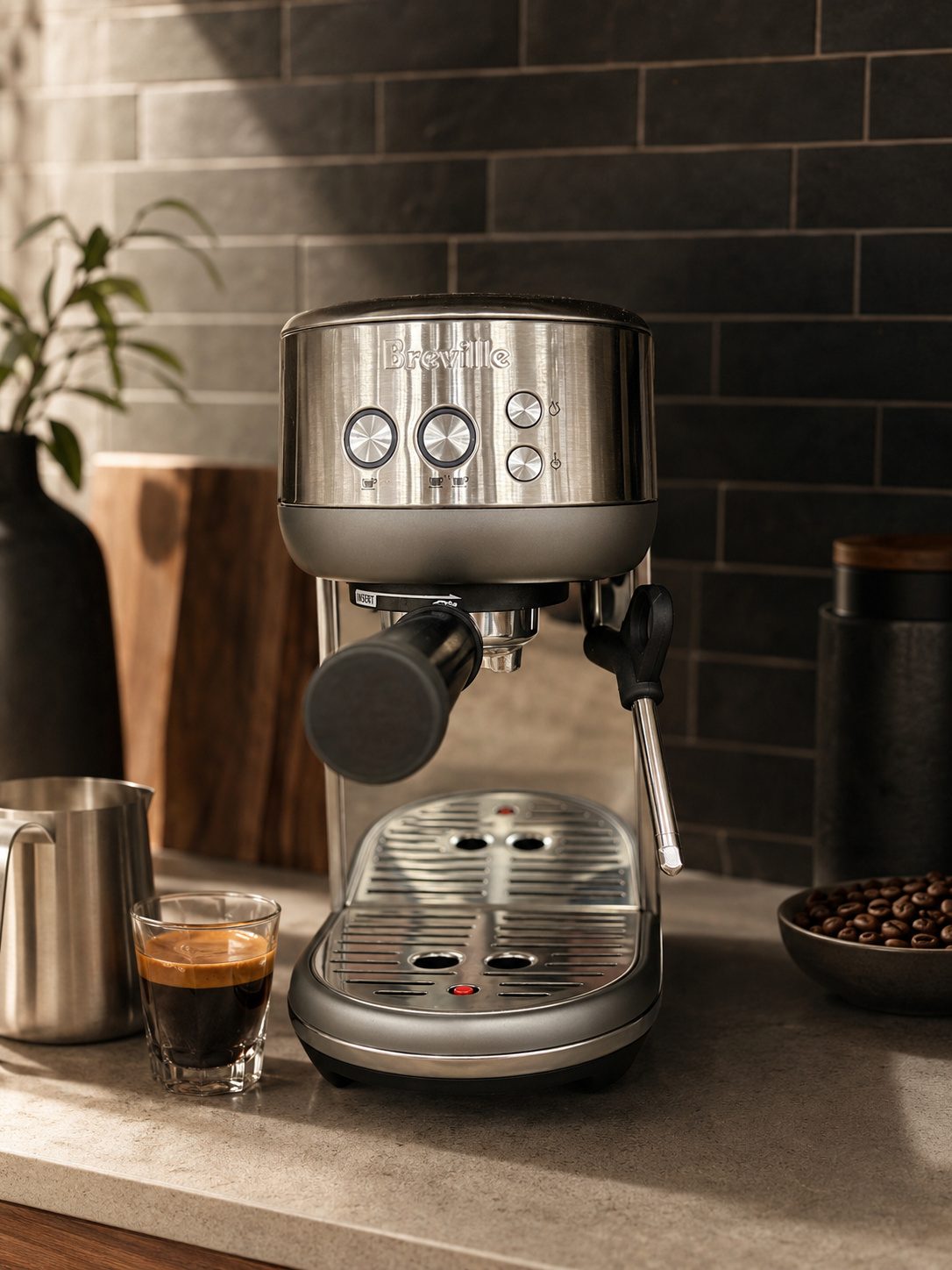
The Breville Bambino appears on nearly every beginner espresso shortlist for good reason: it is small, heats up fast, and costs less than most semi-serious espresso machines. But the question most reviews don't answer clearly is whether the Bambino is a good buy for your specific situation — or just a popular one.
This review treats the Bambino the way HomeCoffeeStack treats every piece of gear: as one layer in a complete Coffee Stack. The machine is not your setup. Your grinder, beans, workflow, and accessories are what determine whether the Bambino feels like a bargain or a frustrating dead end. Here is what you actually need to know before buying.
Quick Verdict: Is the Breville Bambino Worth It?
Bottom line: Yes — for beginners who want compact, affordable real espresso and are willing to invest in a capable grinder alongside it. The Bambino is not the right buy if you expect good espresso from pre-ground coffee alone, want automatic milk steaming, or want to avoid buying a grinder entirely.
- Best for: Beginners, small kitchens, milk-drink lovers, grinder-first budgeters
- Not for: Automatic milk steaming, prosumer build quality, built-in-grinder convenience, heavy back-to-back use
- Machine price: Commonly around $299 MSRP — verify current price at Breville, Amazon, and major retailers
- Realistic full setup cost: Approximately $500–$850 depending on grinder choice — verify current prices
- The one rule: Budget for a real grinder first. It matters more than upgrading the machine.
Check current Bambino price on Amazon
Breville Bambino at a Glance
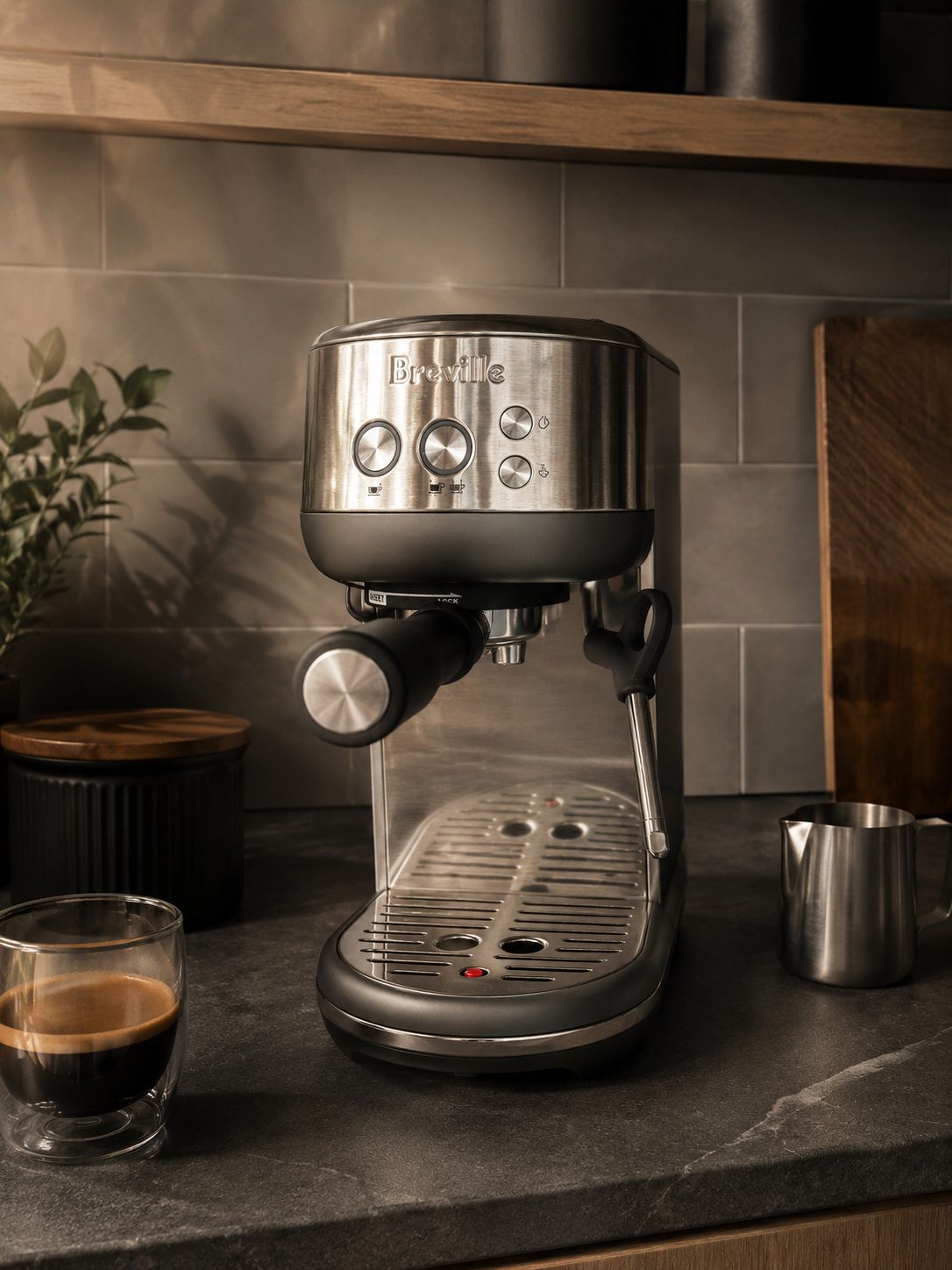
The Bambino (model BES450 in most markets — verify your local model number) is a semi-automatic espresso machine built around Breville's ThermoJet heating system. The headline spec most people quote is the fast heat-up time, but the more important facts for buyers are the 54mm portafilter, the manual steam wand, and the absence of a built-in grinder. Here is a quick-reference spec summary:
| Feature | Breville Bambino | Why It Matters |
|---|---|---|
| Approximate price (MSRP) | ~$299 — verify current price | The Bambino's value depends on current street pricing, which varies |
| Dimensions (approx.) | ~7.7" W × 12.2" H × 12.5" D — verify official specs | Compact enough for small counters, but you still need grinder space |
| Water tank capacity | ~47 oz / 1.4 L — verify | Adequate for home use; smaller tanks need more frequent refills |
| Portafilter size | 54mm | Determines basket and accessory compatibility |
| Heating system | ThermoJet — very fast heat-up | Shorter wait time vs. traditional thermoblock or boiler machines |
| Steam wand | Manual, panarello-style | Capable of good microfoam with practice; not automatic |
| Built-in grinder | None | You must budget for a separate grinder |
| Included baskets | Pressurized and non-pressurized (single and double) — verify current bundle | Pressurized baskets are forgiving; non-pressurized reward a good grinder |
| Pump pressure | 15-bar pump (9-bar extraction) — verify | Standard for home semi-automatics |
| Warranty | 2 years — verify current Breville warranty terms | Appliance-style warranty, not prosumer-rebuildable |
Where the Bambino Fits in the Coffee Stack
The Bambino is the machine layer of your espresso stack, and it is only one layer. If you think of your espresso setup as a system — machine, grinder, beans, accessories, and workflow — the Bambino slots in as a solid, compact machine layer. Every other layer still needs to be filled.
Here is what a complete Bambino stack looks like and what it realistically costs:
| Stack Layer | Budget Pick | Better Pick | Approx. Price (verify) | Required? |
|---|---|---|---|---|
| Espresso machine | Breville Bambino | Breville Bambino (same machine) | ~$250–$299 | Required |
| Grinder | Baratza Encore ESP or Fellow Opus | DF54-style single-dose or Eureka Mignon | ~$195–$350+ | Required for real espresso |
| Scale | Any 0.1g kitchen scale | Dedicated coffee scale with timer | ~$15–$75 | Strongly recommended |
| Tamper & dosing funnel | Included tamper + budget funnel | Calibrated tamper + 54mm funnel | ~$10–$40 | Optional but helpful |
| Beans | Fresh espresso roast from a local roaster | Specialty subscription (Trade, Atlas, etc.) | ~$15–$22 per bag | Required — freshness matters |
| Cleaning supplies | Breville cleaning tablets | Breville descaler + cleaning kit | ~$10–$20 | Required for longevity |
The honest math: the Bambino's attractive machine price can obscure the real cost of a capable setup. A Bambino plus a grinder, scale, and accessories will run approximately $500–$850 depending on your grinder choice. That is a fair price for genuine home espresso — but it is not a $299 purchase. The grinder is not optional if your goal is espresso that actually tastes good.
The grinder matters more than upgrading the machine. A Bambino paired with a solid espresso grinder will outperform a more expensive machine paired with a blade grinder or cheap burr grinder every single time.
Want to map out your full setup? Use the HomeCoffeeStack Stack Builder to plan machine, grinder, and accessories together.
What the Breville Bambino Does Well
Compact footprint. The Bambino is genuinely small for a semi-automatic espresso machine. If you have a narrow countertop, a galley kitchen, or limited cabinet depth, it fits where many competitors will not. Just remember: you still need space for a grinder, milk pitcher, and a small prep area.
Fast heat-up. ThermoJet heat-up is one of the Bambino's most practical advantages. You are not waiting several minutes for the machine to reach temperature before your morning pull. This makes it feel approachable for daily use in a way that slower machines do not.
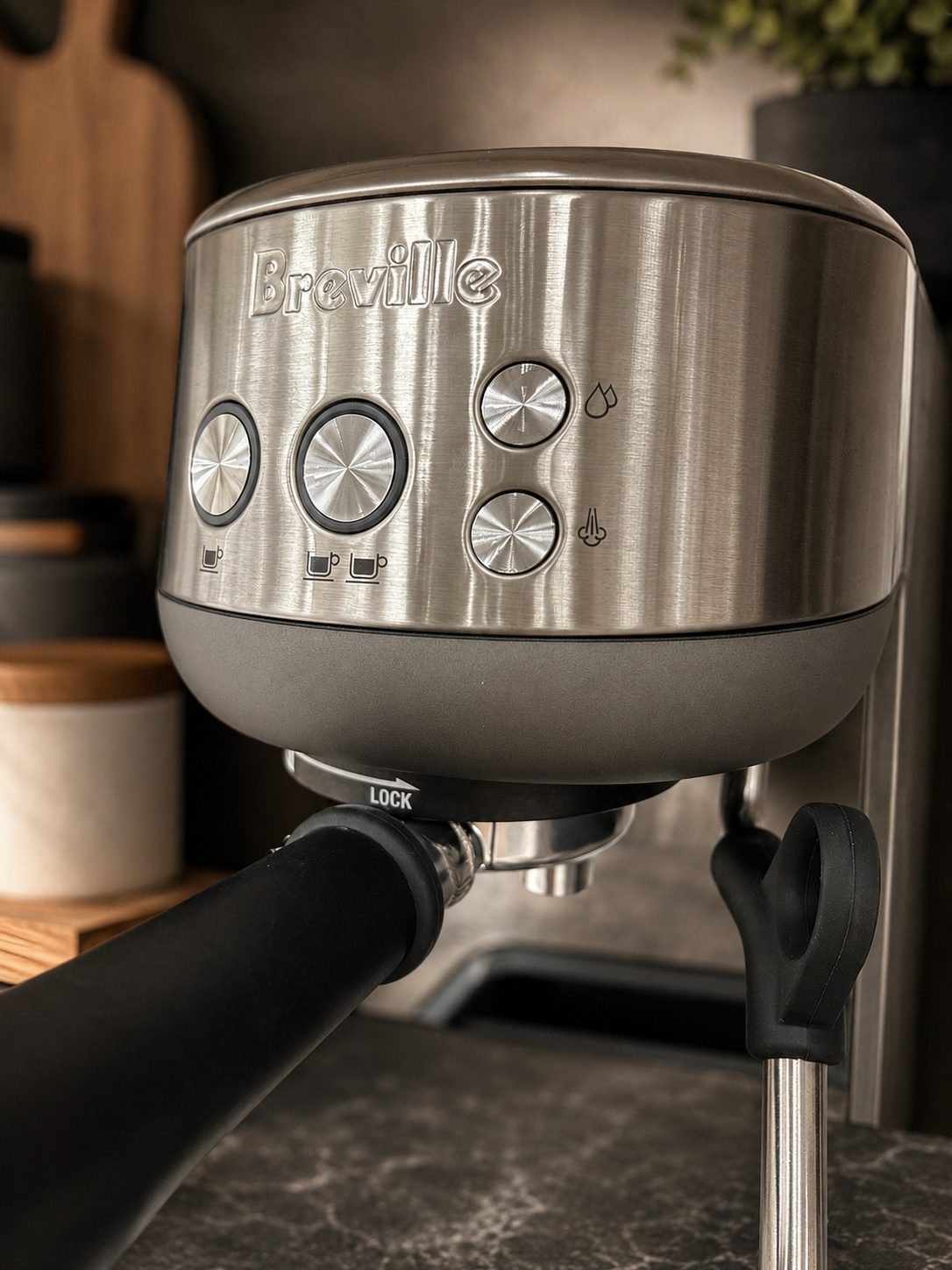
Beginner-friendly controls. There are not many buttons or settings to learn. Volume-control buttons let you pre-program shot length, and the auto-purge after steaming is a nice convenience touch. The simplicity is a genuine asset when you are still learning puck prep and dialing in grind settings — you have fewer machine variables to manage.
Good milk-drink potential. The manual steam wand produces enough steam power for lattes, cappuccinos, and cortados. It is not the easiest wand to learn, but it is capable. Once you have the technique down, you get real control over milk texture.
Strong value at sale pricing. The Bambino frequently appears at discounts below its MSRP. At $249 or lower, it is one of the better-value semi-automatic machines available. Verify current pricing before buying, as street prices vary significantly.
Better than pod machines for real espresso. If you are coming from a Nespresso, Keurig, or cheap steam-pressure machine, the Bambino is a meaningful step up in espresso quality and in what you can learn about the craft.
Where the Breville Bambino Falls Short
Lightweight, appliance-style build. The Bambino is made to hit a price point. It does not feel like a heavy commercial machine, and it is not designed to be repaired or rebuilt the way a prosumer machine might be. For most home users this is fine, but if you want something that feels substantial or that you can service yourself, look elsewhere.
Manual milk steaming takes practice. The panarello steam wand is functional, but free-pouring good microfoam is a learned skill. If you want to set a cup under a wand and walk away with perfectly textured milk, you want the Bambino Plus, not the Bambino.
Limited advanced control. There is no pressure profiling, no PID temperature display, and no advanced workflow tools. For a beginner this is fine — even good. But if you know you will want to experiment with temperature surfing, pressure adjustments, or custom extraction profiles within a year, the Bambino may feel limiting sooner than you expect.
Smaller drip tray and water tank workflow. The water tank capacity and drip tray size are appropriate for one or two drinks at a time. If you are making espresso for a group or doing back-to-back drinks at a gathering, you will be refilling and emptying more often than you want.
Needs a grinder to shine. This is not a flaw, but it is a reality. The Bambino's best espresso requires fresh beans and a capable grinder. Without one, you are using expensive equipment to make mediocre espresso.
Accessory bundle may need upgrades. Depending on your market and retailer, the included tamper and baskets may be adequate to start, but many users add a better tamper, a dosing funnel, or an aftermarket basket over time.
Espresso Quality: What to Expect
The honest answer is that espresso quality from the Bambino exists on a spectrum, and where you land on that spectrum is mostly determined by what you pair it with — not the machine itself.
With pre-ground coffee and pressurized baskets: You will get a consistent, drinkable shot. The pressurized basket compensates for inconsistent grind size and makes acceptable espresso from supermarket pre-ground coffee. This is fine for casual use, but you will not taste the machine's real potential, and the results will feel similar to what a much cheaper machine can produce.
With fresh beans and an espresso-capable grinder: The Bambino opens up noticeably. You can begin dialing in grind size, dose, and yield, and the machine will reward that effort with genuinely flavorful espresso — bright, sweet, with proper crema. Most beginners are surprised how good the results can be once the grinder is no longer the weak link.
With careful puck prep (scale, WDT, consistent tamp): The Bambino is capable of home espresso that is genuinely satisfying and that will hold up to comparison with what you pay for at a good café. It is not a commercial machine, but it is real espresso.
With a poor grinder: Frustrating and inconsistent. Channeling, sour or bitter shots, and unpredictable extraction are grinder problems, not machine problems. Upgrading the Bambino to a more expensive machine without upgrading the grinder changes almost nothing about the espresso in your cup.
Milk Steaming and Latte Performance
The Bambino's manual steam wand is one of the main points of comparison with the Bambino Plus. Here is the practical breakdown:
The wand produces good steam pressure for a machine at this price. With practice — typically a week or two of daily steaming — most people can produce smooth, pourable microfoam suitable for lattes and cappuccinos. The technique is to introduce steam at the surface of the milk first to stretch and incorporate air, then submerge the tip slightly to roll and heat the milk evenly. It is a learnable skill, not a complicated one.
The panarello-style tip gives some assistance to beginners, though it produces more froth and less silky microfoam than a bare steam tip. Some users replace the tip with a bare-tip attachment for more control as their skills improve.
If you want automatic milk texturing — where you put a pitcher of milk under the wand, press a button, and get consistent microfoam without manual technique — that is the Bambino Plus's territory. The Bambino is better for people willing to develop the skill in exchange for saving money they can put toward a better grinder.
Breville Bambino vs Bambino Plus
This is the most common comparison for Bambino buyers. The short version: the decision comes down to whether automatic milk steaming is worth the price difference to you, and whether that difference would be better spent on a grinder.
| Feature | Bambino | Bambino Plus | Who Should Care |
|---|---|---|---|
| Approximate price | ~$299 MSRP — verify | ~$499 MSRP — verify | Anyone comparing total setup cost |
| Milk steaming | Manual steam wand | Automatic milk texturing | Anyone making daily lattes or cappuccinos |
| Learning curve for milk | Moderate — requires practice | Low — hands-off automatic | Beginners who want convenience |
| Water tank | ~47 oz — verify | ~64 oz — verify | Anyone making multiple drinks or refilling less often |
| Drip tray | Standard | Slightly larger — verify | Multi-drink household use |
| Espresso quality difference | Essentially the same | Essentially the same | Neither machine outperforms the other on espresso — grinder is the variable |
| Built-in grinder | No | No | Both need a separate grinder |
| Best for | Grinder-first buyers willing to learn steaming | Convenience-first buyers, daily latte drinkers | Depends on your priorities |
The honest take: If you are deciding between Bambino and Bambino Plus, ask yourself where the price difference goes. Spending ~$200 more on automatic milk steaming is reasonable if you make lattes every morning and don't want to learn the wand. But if you plan to keep using a weak grinder, that same $200 spent on a better grinder will improve your espresso far more than automatic milk texturing will. The grinder decision comes before the machine upgrade decision.
Best Grinders to Pair With the Breville Bambino
The grinder is the most important purchase decision in a Bambino setup. Here are the pairings that make the most sense at different budgets and use cases:
| Grinder | Type | Best For | Approx. Price (verify) | Why It Pairs Well | Skip If |
|---|---|---|---|---|---|
| Baratza Encore ESP | Electric burr | Beginners who want an electric espresso grinder on a tight budget | ~$199 — verify | Espresso-capable grind range, recognizable brand, also handles filter coffee | You want very precise single-dose workflow or premium espresso refinement |
| Fellow Opus | Electric burr | Design-conscious beginners who also brew filter coffee | ~$195–$200 — verify | Attractive design, broad grind range, good countertop fit with Bambino | You switch brew methods often and find multi-method adjustment confusing |
| 1Zpresso J-Ultra (or similar espresso hand grinder) | Manual burr | Solo users who want high grind quality for less money and don't mind hand grinding | Verify current pricing — premium hand grinder range | Excellent burr quality for the price, compact, no motor noise | You make multiple drinks daily, live with others, or dislike manual effort |
| DF54 / Turin-style single-dose | Electric single-dose | Enthusiasts who want a serious espresso grinder without spending prosumer-machine money | Verify current pricing and retailer availability | Strong espresso value, single-dose workflow, compact form | You want a simple plug-and-go appliance experience |
| Eureka Mignon entry models | Electric burr | Buyers who want a dedicated espresso grinder with stepped-up build quality | Verify current pricing | Designed specifically for espresso, good retention control, durable | Budget is tight — better to start with Encore ESP and upgrade later |
A grinder is not optional if your goal is espresso that actually rewards the Bambino's capabilities. The most common beginner mistake in a Bambino setup is keeping a blade grinder or under-spec burr grinder and then blaming the machine for inconsistent shots.
Browse the HomeCoffeeStack grinder hub for full grinder reviews and comparisons, or see the beginner espresso grinder guide.
Accessories You Actually Need
Keep this simple. Here is what to buy first and what to add later:
Start here:
- 0.1g scale — Non-negotiable for dialing in dose and yield. A basic kitchen scale with 0.1g resolution is fine. A coffee-specific scale with a built-in timer is better but not necessary on day one.
- Capable grinder — See grinder section above. This is the single most important purchase alongside the machine.
- Fresh espresso beans — Buy from a local roaster or a specialty subscription. Beans roasted within the past 2–4 weeks make a significant difference. Supermarket coffee in cans will not show you what the Bambino can do.
- Milk pitcher — A 12 oz stainless pitcher is standard for single drinks. Included with some Bambino bundles; verify your bundle.
Add when you identify the gap:
- Dosing funnel (54mm) — Keeps grounds off the counter and inside the basket. Inexpensive and genuinely useful.
- WDT (Weiss Distribution Technique) tool — A simple stirring tool to break up clumps in the puck before tamping. Noticeably improves extraction consistency.
- Better tamper — The included tamper is functional. A calibrated tamper (30 lb spring-loaded) removes one variable. Not urgent.
- Knock box — For disposing of spent pucks cleanly. Optional but convenient.
- Breville cleaning tablets and descaler — Required for machine longevity. Use as directed by Breville's maintenance schedule.
Do not buy every accessory at once. Learn the machine, identify your actual friction points, and then buy targeted solutions. Accessory creep is common with espresso beginners, and most of it adds complexity before it adds quality.
Who Should Skip the Breville Bambino?
The Bambino is not the right machine for everyone. Here is when to look elsewhere:
- You don't want to buy a separate grinder. Without a real grinder, the Bambino cannot express its potential. If you want an all-in-one solution, look at a machine with a built-in grinder — but understand the tradeoffs of integrated grinders.
- You want automatic milk steaming. The Bambino requires you to learn manual steaming. If that is not appealing, the Bambino Plus is the direct upgrade.
- You regularly make espresso for groups. The Bambino's water tank and thermal recovery are designed for one or two drinks at a time. Back-to-back entertaining is not its strength.
- You want prosumer build quality or repairability. The Bambino is an appliance. It is not designed to be serviced, rebuilt, or modified the way a traditional E61 group head machine or a La Marzocco Linea Mini might be.
- You want advanced extraction control. No pressure profiling, no PID display, no advanced workflow tools. If you know you want those features, you have outgrown the Bambino before you buy it.
- You expect great espresso from pre-ground coffee. Pre-ground coffee with pressurized baskets is passable, not remarkable. The Bambino rewards fresh beans and a real grinder; it does not compensate for the absence of them.
Final Verdict: The Best Bambino Setup for Most People
For a beginner who wants real home espresso in a compact, approachable machine, the Breville Bambino is one of the better-value choices available — as long as the rest of the stack is in place.
Here is the setup that works for most people entering home espresso with a Bambino:
- Machine: Breville Bambino (~$299 MSRP — verify current price)
- Grinder: Baratza Encore ESP or Fellow Opus for most beginners (~$195–$200 — verify); 1Zpresso J-Ultra if you prefer hand grinding; DF54-style grinder if you want to invest more in grind quality
- Beans: Fresh espresso roast from a local roaster or specialty subscription, medium or medium-dark
- Scale: Any 0.1g-resolution scale
- Accessories: Dosing funnel, milk pitcher — add WDT tool and knock box when you are ready
Total realistic cost: approximately $500–$850 depending on grinder choice. Verify all current pricing before buying, as espresso equipment prices change frequently.
The Bambino is not the limiting factor in that setup. The grinder, beans, and your willingness to practice puck prep and milk steaming are. Get those right, and the Bambino will deliver genuinely good home espresso for years.
Ready to plan your full setup? Use the Coffee Stack Builder to map out machine, grinder, beans, and accessories together. Or browse the full espresso machine hub and grinder hub to compare more options.
FAQ
Is the Breville Bambino worth it?
Yes, for beginners who want a compact, affordable espresso machine and are willing to invest in a capable grinder. It is less compelling if you plan to use pre-ground coffee or an inadequate grinder, where results will be inconsistent and the machine's real potential stays locked.
Do I need a grinder for the Breville Bambino?
Yes, if you want genuine espresso quality. The Bambino can use pressurized baskets with pre-ground coffee and will produce acceptable results, but real espresso depends on a fresh, fine, and consistent grind. The grinder is the single most important purchase in a Bambino setup — more important than any machine upgrade.
What is the best grinder for the Breville Bambino?
For most beginners, the Baratza Encore ESP or Fellow Opus are the most practical electric pairings (verify current pricing around $195–$200). If you don't mind hand grinding, a premium espresso hand grinder like the 1Zpresso J-Ultra offers excellent grind quality for less motor-grinder money. Enthusiasts often move to a DF54-style single-dose grinder for stronger espresso performance.
Is the Breville Bambino better than the Bambino Plus?
It depends on your priorities. The Bambino is the better value if you're willing to learn manual milk steaming. The Bambino Plus adds automatic milk texturing, a larger water tank, and slightly more convenience — worth the price if you make daily lattes and want a hands-off approach. Critically, both machines need a good grinder, and the price difference between them could go toward a better grinder instead.
Can the Breville Bambino make real espresso?
Yes. With fresh espresso-roasted beans, an espresso-capable grinder, and proper puck prep, the Bambino is capable of genuinely satisfying home espresso. With pre-ground supermarket coffee and pressurized baskets, results are more limited but still adequate for casual use.
Is the Breville Bambino good for lattes and cappuccinos?
Yes. The manual steam wand produces enough steam for lattes and cappuccinos. Achieving good microfoam takes practice — most beginners get comfortable within a week or two. If you want automatic, hands-off milk texturing, the Bambino Plus is the direct upgrade.
What accessories do I actually need for the Breville Bambino?
Start with a 0.1g scale, a capable grinder, fresh espresso beans, and a milk pitcher. A dosing funnel and WDT tool meaningfully improve consistency. A knock box is handy but not urgent. Buy simple first, identify your real friction points, then add targeted accessories as you need them.
Can I use pre-ground coffee with the Breville Bambino?
You can, especially with the included pressurized baskets, and you'll get a drinkable result. But for real espresso quality and flavor, freshly ground coffee from an espresso-capable grinder makes a dramatic difference. Pre-ground coffee limits how precisely you can dial in extraction, and the results will feel similar to what a cheaper machine produces.
How much does a full Breville Bambino setup cost?
The machine itself is commonly around $250–$350 depending on current pricing (verify). A realistic full setup including a capable grinder, scale, milk pitcher, and accessories typically runs $500–$850. Stepping up to an enthusiast grinder can bring the total to $900–$1,100. The machine is rarely the most expensive part of the stack once you include everything you actually need.
Who should skip the Breville Bambino?
Skip it if you don't want to buy a separate grinder, want automatic milk steaming, prefer a built-in-grinder convenience machine, regularly make drinks for multiple people back-to-back, or want a prosumer machine you can service and rebuild long-term. For those situations, the Bambino Plus, a Barista Express, or a more capable single-boiler machine is likely a better fit.