 By Jared White · Home Barista & Systems Thinker
Level 1 Survival (pre-ground + auto-drip) → Level 2 Awakening (burr grinder + fresh beans) → Level 3 Systemized (balanced complete stack, repeatable recipe) → Level 4 Optimized (dialed-in, dedicated space, deliberate upgrades) → Level 5 Mastery (prosumer gear, full control, teaching others). Most people jump from 1 to 3 in a single weekend with the right guidance.
Why think in levels?
A coffee maturity model does two things. First, it tells you honestly where you are — most people overestimate, because they own gear they don't use well. Second, it tells you what to do next: the single highest-impact move to reach the next level. Instead of randomly accumulating gadgets, you progress deliberately.
This mirrors the systems framework: each level represents a more balanced, more capable version of all five layers (grind, brew, beans, workflow, space) working together. You level up by strengthening your weakest layer, not by buying the most exciting new toy. See the five-layer framework →
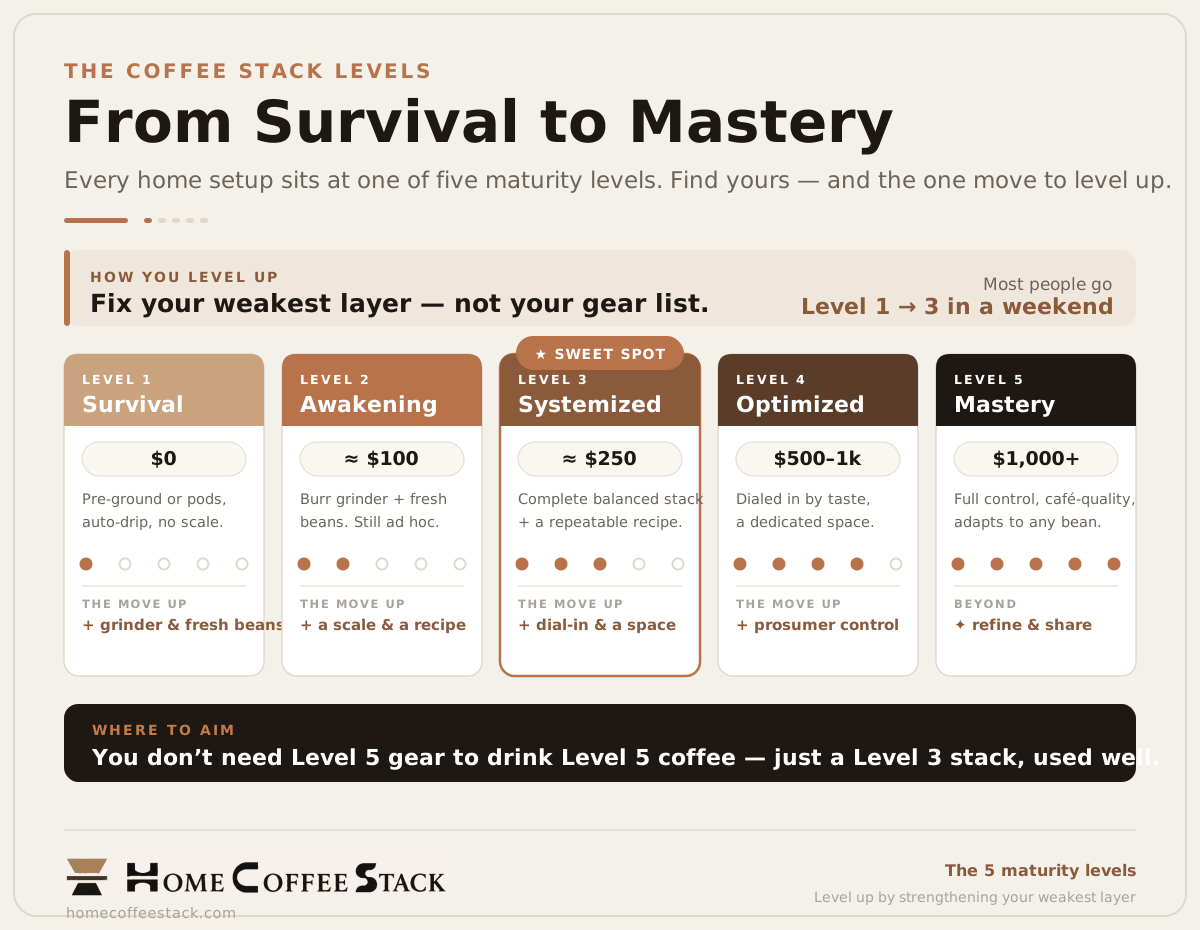
The five coffee stack levels
Pre-ground coffee, an auto-drip machine or pods, no scale, no fresh beans. Coffee is caffeine delivery, not an experience. There's nothing wrong with this if it's all you want — but if you're reading this, you're ready to leave it.
The move to Level 2: buy a burr grinder and a bag of fresh whole beans. That single step transforms your cup more than anything else you could do.
You've added a burr grinder and started buying fresh whole beans. You can taste the difference and you're hooked. But the rest of the system is still ad hoc — no scale, inconsistent technique, no repeatable recipe.
The move to Level 3: add a scale, adopt a brew method you enjoy, and start following a recipe. Complete the stack.
You have a complete, balanced stack — grinder, brewer, scale, fresh beans — and a repeatable recipe that produces consistently good coffee. This is the level most enthusiasts can reach for under $250, and it's genuinely satisfying. Many people happily stay here forever.
The move to Level 4: upgrade your weakest layer, build a dedicated space, and start dialing in deliberately rather than following a fixed recipe.
Your system is dialed in. You adjust grind by taste, you have a dedicated coffee space organized around your workflow, and your upgrades are deliberate — you know exactly which layer you're improving and why. Coffee is a craft you're actively developing. This is often the $500–$1,000 stack territory.
The move to Level 5: invest in prosumer-grade gear and pursue full control over every variable.
Prosumer equipment, full control of every variable, and the ability to produce café-quality results consistently and adapt to any bean. You're likely helping friends build their own stacks. The gear matters less here than the skill — a master makes great coffee on modest equipment because every layer and technique is honed.
Beyond Level 5: it's no longer about the stack — it's about refinement, exploration, and sharing the craft.
Which level should you aim for?
Here's the honest answer most coffee content won't give you: Level 3 is the sweet spot for most people. A complete, balanced, systemized stack produces genuinely excellent coffee, costs relatively little, and fits into a normal morning. You don't need Level 5 gear to drink Level 5 coffee day to day — you need a well-built Level 3 system used well.
Go beyond Level 3 only if the craft itself appeals to you — if dialing in espresso, chasing flavor clarity, and tinkering with variables sounds fun rather than tedious. There's no wrong answer. The goal is the coffee you enjoy, made in a way you enjoy, not climbing a ladder for its own sake.
Whatever level you're at, the way up is always the same: identify the weakest of your five layers and strengthen it. A Level 3 setup with a great grinder but stale beans levels up by fixing the beans — not by buying a fancier brewer. Diagnose honestly, then act.