 By Jared White
The De'Longhi Dedica is a good buy if you need a slim, affordable espresso machine for beginner milk drinks — but it is not a complete espresso setup by itself. It only makes sense if you pair it with the right grinder, use realistic expectations, and understand the limits of its compact 51mm system.
This review looks at the Dedica as part of the Coffee Stack: machine, grinder, beans, accessories, space, and workflow. A machine review that ignores the stack is just a spec sheet. You deserve better than that.
Quick Verdict: Is the De'Longhi Dedica Worth It?
The short answer is yes — in the right situation. The Dedica earns its place as a compact, forgiving beginner machine for small kitchens and everyday milk drinks. It is not the right choice if you want to seriously learn espresso, if the Breville Bambino is similarly priced, or if you refuse to budget for a real grinder.
| Category | Dedica Assessment | Why It Matters |
|---|---|---|
| Setup cost (machine only) | ~$200–$350 (verify current price) | Affordable entry, but grinder adds $80–$250+ |
| Beginner friendliness | High — pressurized basket is forgiving | Works with preground coffee; low-stress workflow |
| Espresso quality | Moderate — good with fresh beans + grinder | Pressurized basket limits true espresso feedback |
| Milk drinks | Good enough for lattes and cappuccinos | Steam power is limited but usable |
| Grinder dependence | High if you want real results | Grinder matters more than any other upgrade |
| Upgrade path | Limited — 51mm ecosystem ceiling | Not the platform for serious hobbyists |
| Counter-space fit | Excellent — about 6 inches wide | One of the slimmest espresso machines available |
Best for: Small kitchens, beginners, milk drink lovers, budget-first setups.
Not for: Serious espresso learners, 58mm accessory users, straight espresso purists.
Must pair with: An espresso-capable grinder if you want results beyond preground convenience.
Better alternative if: The Breville Bambino is at a similar price and you have the counter space.
Check the current price of the De'Longhi Dedica Arte on Amazon →
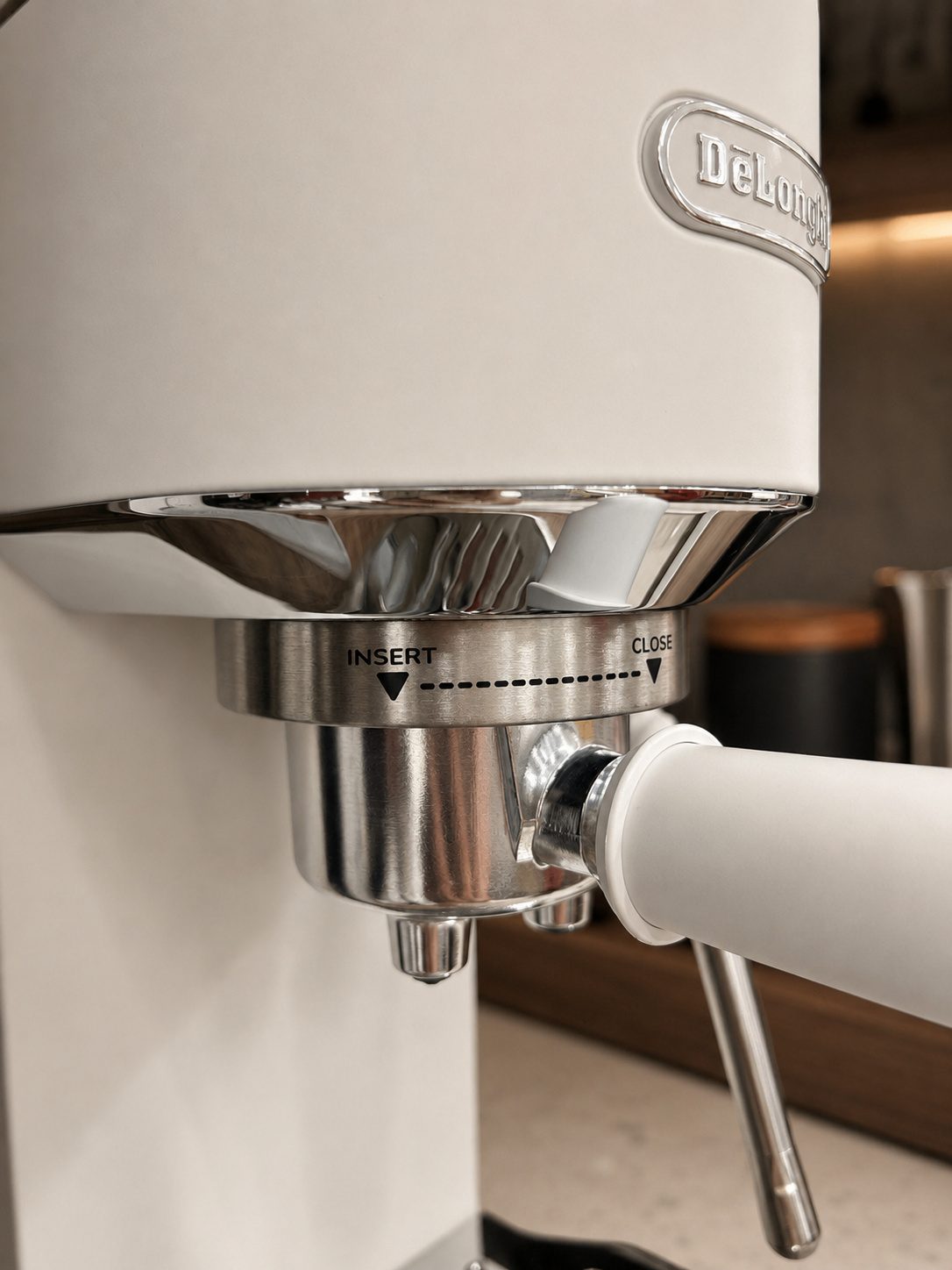
Which De'Longhi Dedica Model Are We Talking About?
The Dedica line has evolved over several years, and the naming can be confusing at first glance. Here are the main models you will encounter:
- EC680: The original Dedica. Slim, simple, pressurized baskets, basic steam wand. Still found on sale and at lower prices.
- EC685 (Dedica Deluxe): Adds a few workflow refinements over the EC680, including a slightly improved steam wand. Still commonly available and often the "default" Dedica you will find at major retailers.
- EC885 (Dedica Arte): The current flagship of the Dedica line. Adds a more capable steam wand, updated styling, and improved milk texturing performance. Generally the best version to buy new if price is acceptable.
All three use a 51mm portafilter system and include pressurized single and double baskets. ESE pod compatibility is included on most models — verify your specific SKU. Model naming and availability vary by region and retailer, so confirm what is currently stocked before buying.
The Dedica in the Coffee Stack
The Dedica is the machine layer of your stack. By itself, it is incomplete. Here is what a realistic stack looks like at three tiers:
| Setup Tier | Machine | Grinder | Key Accessories | Best For | Approx. Total |
|---|---|---|---|---|---|
| Minimal pressurized | Dedica EC685 or Arte | None (preground) | Scale, milk pitcher | Convenience milk drinks | ~$230–$380 |
| Recommended beginner | Dedica Arte EC885 | Baratza Encore ESP or Fellow Opus | Scale, pitcher, tamper | Better espresso + lattes | ~$420–$600 |
| Enthusiast-modified | Dedica + non-pressurized basket | Espresso-focused grinder | Scale, WDT, dosing funnel, pitcher | Skill-building (with caveats) | ~$550–$800+ |
The third tier deserves a candid note: once your total Dedica stack reaches $600–$800, you are getting close to territory where a Breville Bambino or Gaggia Classic Pro becomes a smarter long-term investment. The Dedica has a real upgrade ceiling because of its 51mm portafilter and limited temperature control. Budget accordingly.
Not sure where to start? The Coffee Stack Builder can map out a full setup matched to your budget and goals.
What the Dedica Does Well
Slim footprint. The Dedica is roughly 6 inches wide — meaningfully narrower than most espresso machines. If you have a galley kitchen, a small apartment counter, or a workspace with limited room, this is a genuine advantage that very few machines match at this price.
Fast warm-up. Most Dedica models are ready to pull a shot in about 30–40 seconds. For a single-boiler machine at this price, that is a practical daily advantage.
Pressurized-basket forgiveness. The included pressurized baskets reduce the demand on grind quality, meaning preground coffee or mediocre grinding produces more drinkable results than it would in a standard single-walled basket. For absolute beginners, this lowers the barrier to entry.
Approachable controls. The Dedica does not overwhelm new users. Shot volume is programmable, the buttons are straightforward, and there is no steep learning curve just to get a shot out.
Attractive, compact design. The Dedica Arte in particular looks good on a counter. Design is not a technical merit, but it does matter when people are deciding what to put in their kitchen.
Where the Dedica Falls Short
51mm portafilter ecosystem. Most quality aftermarket baskets, bottomless portafilters, and tampers are built for 58mm (the industry standard). The Dedica's 51mm system limits your accessory options and makes the upgrade path narrower than machines like the Breville Bambino or Gaggia Classic.
Pressurized basket as default. The pressurized basket makes shots forgiving, but it also masks extraction feedback. You cannot learn as much from your shots because the basket is doing some of the work for you. For beginners who specifically want to develop espresso skills, this is a real limitation.
Limited temperature and pressure control. The Dedica does not allow you to adjust brew temperature or pressure directly. More advanced machines let you fine-tune these variables for different beans and roasts. The Dedica keeps things simple — at the cost of flexibility.
Small cup clearance. The Dedica is a slim, upright machine, which means the clearance between the portafilter and the drip tray is limited. Taller travel mugs or standard double-walled glasses may not fit without removing the drip tray.
Modest steam power. The steam wand on the EC685 is functional but limited for milk texturing. The Dedica Arte (EC885) improves this somewhat, but it still does not match the steam power of the Breville Bambino Plus or stronger machines. For basic lattes it is fine; for consistent microfoam it takes more work.
Light build quality. The Dedica is a largely plastic machine. It does not feel flimsy, but it is noticeably lighter and less substantial than the Gaggia Classic or even the Breville Bambino. Vibration during pulling shots is more pronounced than on heavier machines.
Espresso Quality: Pressurized vs Non-Pressurized Results
Here is what to honestly expect from the Dedica depending on your setup:
With preground coffee and the pressurized basket: You will get drinkable espresso-style shots, good enough for milk drinks. Expect modest crema, muted flavor complexity, and inconsistency batch-to-batch. This is the "convenience espresso" tier — fine for daily lattes, not exciting for straight shots.
With fresh beans and a capable grinder, pressurized basket: Noticeably better. Fresh-ground coffee through even a pressurized basket produces more aroma, better crema body, and fuller flavor. This is the sweet spot for most Dedica users.
With a non-pressurized basket and an espresso grinder: This is where the Dedica can punch above its weight — but only if your grinder can actually dial in for espresso. Fine, consistent grind adjustment is critical. Without a proper grinder, a non-pressurized basket will just produce channeled, under-extracted shots. Do not buy a bottomless portafilter before you buy a grinder.
The honest summary: the Dedica makes good enough espresso for milk drinks at the beginner level. It is not a machine for chasing the perfect straight shot. If that is your goal, compare it against the Bambino or save for the Gaggia Classic.
Milk Steaming and Latte Performance
Milk drinks are where the Dedica is most at home. With a small-to-medium pitcher and some practice, you can produce acceptable foam for lattes and cappuccinos. The EC885 Dedica Arte improved the wand design over the older EC685, adding a Pannarello-style wand that helps beginners create foam without much technique.
The limitation is steam pressure. The Dedica is a single-boiler machine and its boiler is small. It produces enough steam for one or two drinks, but the texture is harder to control at the microfoam level compared with dedicated steam boilers or thermocoil machines like the Breville Bambino Plus. For everyday lattes, it is workable. For latte art or precise microfoam, it will require patience and practice.
The Best Grinders to Pair With the De'Longhi Dedica
The grinder is the most important purchase you will make for this setup. A Dedica with a capable grinder outperforms a Dedica with preground coffee by a wide margin. Here are the options by budget:
| Grinder | Type | Approx. Price | Best For | Limitation |
|---|---|---|---|---|
| KINGrinder K6 | Manual | ~$80–$130 (verify) | Budget-first stacks, single shots | Manual effort; slow for multiple drinks |
| Baratza Encore ESP | Electric | ~$199 (verify) | Beginner electric, espresso-focused range | Not as refined as higher-end burr sets |
| Fellow Opus | Electric | ~$195 (verify) | Multi-method users (espresso + filter) | Espresso adjustment can feel less intuitive at first |
| 1Zpresso J-Ultra | Manual | ~$200+ (verify) | Premium manual espresso grinding | Manual effort; premium price for a hand grinder |
For most beginners pairing with the Dedica, the Baratza Encore ESP is the practical recommendation: it is designed with espresso in mind, it is reliable, and it is available from reputable retailers. The Fellow Opus is a strong alternative if you also brew pour-over or French press.
See the full breakdown in the best espresso grinders guide or the Baratza Encore ESP review.
Accessories Worth Buying — and What to Skip at First
| Accessory | Priority | Why It Helps | Approx. Price | Timing |
|---|---|---|---|---|
| 0.1g kitchen scale | Essential | Consistent dose and yield | ~$15–$30 (verify) | Buy first |
| Milk frothing pitcher (12 oz) | Essential for milk drinks | Proper steaming vessel | ~$10–$20 (verify) | Buy first |
| Tamper (51mm) | High | Even puck compression | ~$15–$40 (verify) | Buy early |
| Descaler | High | Machine longevity | ~$10–$15 (verify) | Buy early |
| Dosing funnel (51mm) | Medium | Cleaner workflow, less mess | ~$10–$20 (verify) | Buy after grinder |
| WDT tool | Medium | Reduces channeling in puck | ~$10–$25 (verify) | Buy after grinder |
| Non-pressurized basket | Optional | Unlocks better espresso extraction | ~$15–$30 (verify) | Only after a capable grinder |
| Bottomless portafilter | Skip for now | Diagnosis tool for advanced users | ~$30–$60 (verify) | Not before grinder + practice |
The single most common accessory mistake: buying a bottomless portafilter before owning a proper grinder. A bottomless portafilter reveals channeling — it does not fix it. The fix is a better grinder.
De'Longhi Dedica vs Breville Bambino vs Gaggia Classic
This is the most important comparison for most buyers. Here is the honest breakdown:
| Machine | Best For | Key Strengths | Key Weaknesses | Grinder Needed? | Approx. Price |
|---|---|---|---|---|---|
| De'Longhi Dedica Arte | Small kitchens, beginners, milk drinks | Slim footprint, fast warm-up, forgiving pressurized basket | 51mm ecosystem, limited steam, upgrade ceiling | Yes, for best results | ~$200–$300 (verify) |
| Breville Bambino | Beginner espresso learners, better workflow | Fast heat-up, 54mm basket, better steam, stronger extraction baseline | Slightly wider, costs more unless discounted | Yes, absolutely | ~$299–$350 (verify) |
| Gaggia Classic Pro | Espresso hobbyists, skill-building | 58mm ecosystem, commercial group head, excellent upgrade path | Learning curve, requires capable grinder, larger footprint | Yes, non-negotiable | ~$449–$500 (verify) |
Choose the Dedica if: Counter width is a genuine constraint, you are buying during a good sale, and you primarily drink milk-based espresso drinks. Choose the Bambino if: You want a better espresso-learning platform and the price difference is under $75. Choose the Gaggia Classic Pro if: You are ready to commit to the espresso hobby and want a machine that will grow with you for years.
Read the best home espresso machines guide for a broader comparison across the full range.
Realistic Total Cost of a Dedica Setup
Most Dedica reviews list the machine price and stop there. That is not how real setups work. Here is what you will actually spend:
- Machine (Dedica Arte EC885): ~$200–$300 — verify current price
- Grinder (Baratza Encore ESP or Fellow Opus): ~$195–$210 — verify
- Scale: ~$15–$30 — verify
- Milk pitcher: ~$10–$20 — verify
- Tamper + basic accessories: ~$20–$40 — verify
- Beans (first month): ~$15–$30
- Realistic beginner total: ~$450–$630
At the $550–$800 range, the calculus shifts. A Breville Bambino paired with the same grinder often represents better long-term value — more capable steaming, better extraction consistency, and a less constrained accessory ecosystem. Use the Coffee Stack Builder to compare your actual options side by side.
Final Verdict: Who Should Buy the De'Longhi Dedica?
The De'Longhi Dedica is a smart purchase for a specific buyer: someone who needs a genuinely slim espresso machine, is starting from scratch with milk drinks, and understands that the grinder is part of the budget. Paired with a Baratza Encore ESP or Fellow Opus, a basic scale, and fresh beans, it makes a functional and space-efficient beginner setup.
It is not the right machine if you want to seriously develop espresso skills, if standard 58mm accessories matter to you, or if the Breville Bambino is available at a similar price. At those margins, the Bambino is simply a better long-term platform.
The Dedica earns its place in the Coffee Stack as a space-saving starter machine — honest about what it is, honest about what it is not. Treat it that way, pair it well, and it will serve you fine while you learn whether espresso is a hobby worth investing more deeply in.
All prices in this article are approximate and change frequently. Verify current pricing at your preferred retailer before buying. De'Longhi updates its product lineup regularly; confirm the model is currently available before purchasing accessories or third-party baskets.
Check current Dedica Arte pricing on Amazon →
Ready to build the full setup? Start with the beginner espresso setup guide or use the Coffee Stack Builder to map your machine, grinder, and accessories in one place.
FAQ
Is the De'Longhi Dedica worth it?
Yes, if you need a compact beginner machine for milk drinks and can pair it with an espresso-capable grinder. It becomes less compelling if the Breville Bambino is similarly priced, or if your main goal is learning traditional espresso technique.
Can the De'Longhi Dedica make real espresso?
With the stock pressurized basket, it produces forgiving espresso-style shots that work well in milk drinks. For more traditional espresso, you need fresh beans, an espresso-capable grinder, and a non-pressurized basket. Results improve but still have a ceiling compared with stronger machines.
Do I need a grinder for the De'Longhi Dedica?
You can use preground coffee with the pressurized basket, but a dedicated espresso grinder is the single biggest upgrade you can make. The grinder matters more than any other accessory — by a wide margin.
What is the best grinder for the De'Longhi Dedica?
For most beginners, the Baratza Encore ESP or Fellow Opus are strong electric options at around $195–$210 (verify current price). If your budget is tight, an espresso-capable hand grinder like the KINGrinder K6 is a workable starting point. See the full espresso grinder guide for more options.
Is the De'Longhi Dedica better than the Breville Bambino?
The Dedica is slimmer and sometimes cheaper. The Bambino is generally the better overall beginner espresso machine if the price difference is small and counter space allows. Compare current prices before deciding — when the Bambino is on sale, it is often the smarter buy.
What size portafilter does the De'Longhi Dedica use?
Most Dedica models use a 51mm portafilter system. This limits accessory options compared with the standard 58mm ecosystem. Verify the exact model before purchasing third-party baskets or portafilters.
Can you use preground coffee with the De'Longhi Dedica?
Yes. The pressurized basket is designed to be forgiving with preground coffee. Results are acceptable for milk drinks, but fresh-ground coffee tastes noticeably better even through a pressurized basket.
Can the De'Longhi Dedica make lattes and cappuccinos?
Yes. The Dedica Arte (EC885) in particular has an improved steam wand that makes milk texturing more accessible for beginners. Steam power is more limited than stronger machines, but it is workable for everyday lattes and cappuccinos.
Is the De'Longhi Dedica good for beginners?
Yes, especially for small kitchens and forgiving milk drinks. It is less ideal for beginners who specifically want to learn traditional espresso technique, because the pressurized basket masks extraction feedback and limits what you can learn from each shot.
What accessories do I need for the De'Longhi Dedica?
Start with a 0.1g scale, fresh espresso beans, a grinder, and a milk frothing pitcher. Add a better tamper, dosing funnel, and WDT tool after you have a grinder capable of dialing in espresso. Skip the bottomless portafilter until your grinder and technique are ready for it.